Modern overhead garage doors look simple when they glide up and disappear above your vehicle. However, the track system that guides and supports the door is far from simple. A standard sectional door typically weighs 150–400 lbs and is supported by a track system composed of vertical rails, a curved radius, and horizontal rails. These rails are usually formed from galvanized steel or aluminum, materials chosen specifically for their ability to handle repeated mechanical stress and significant weight. The system isn’t a single piece of metal; rather it combines two distinct sections designed for different forms of force: compression in the vertical track and suspension/dynamic stress in the horizontal track.
Understanding how each rail works helps homeowners make informed decisions about maintenance and repairs. Attempting to hammer out a bent section without understanding the purpose of that part can weaken the steel and set up the door for catastrophic failure. This guide explores why the vertical and horizontal rails face very different stresses, why the curved radius is the most critical transition point, and when it is safe to use a mallet versus when a section must be replaced.
1. The Dual Nature of Garage Door Tracks
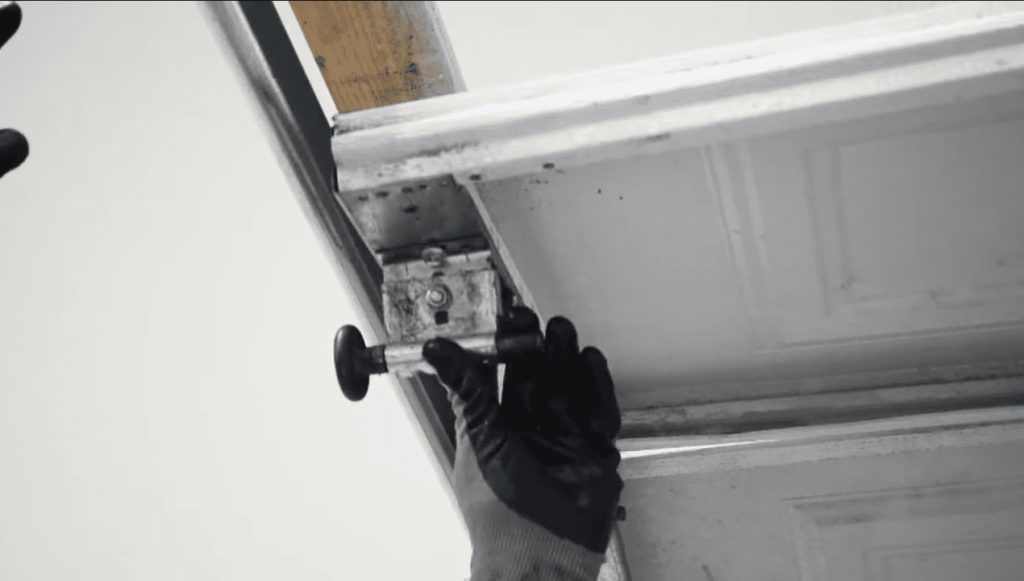
An overhead sectional door rides on rollers that run inside a pair of vertical tracks mounted on either side of the opening and a pair of horizontal tracks running along the ceiling. When the door is closed, the rollers sit in the vertical tracks; as the door opens, they roll through a curved section (the radius) and then travel along the horizontal tracks until the door is fully open. In other words, the track system transforms vertical lifting motion into horizontal storage. Because of this dual motion, the track system must handle two very different types of force:
- Compression stress in the vertical tracks, which support the dead weight of the door panels when the door is closed. As the door begins to move, these tracks initially support the door’s weight before the springs fully take over.
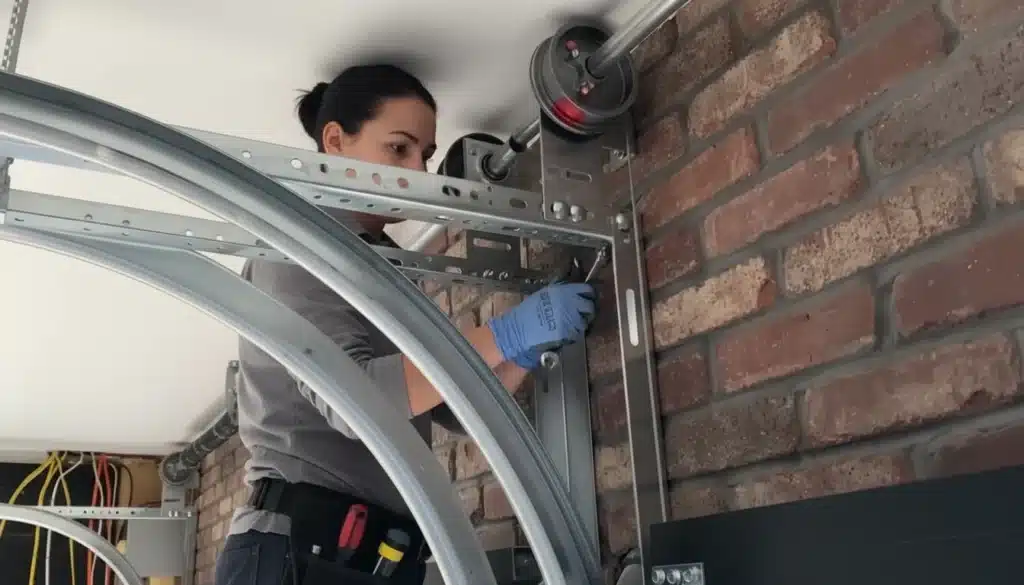
- Suspension/dynamic stress in the horizontal tracks, which hold the entire door overhead. Once the door panels reach the horizontal section, the weight is suspended above you and your vehicle, so the tracks must remain stable and level. Back-hang brackets (support hangers) bolt to the ceiling to prevent the horizontal rails from spreading or sagging. When these brackets loosen, the rails can twist or fish‑tail, making the door wobble side‑to‑side.
Understanding these different forces helps explain why some dents or misalignments can be gently corrected while others require complete track replacement.
2. The Vertical Rail: The Foundation (Compression Stress)
Role and mechanics
Vertical tracks are installed along the sides of the garage door opening and guide the door up and down. They bear the weight of the door during lifting and maintain the door’s alignment, ensuring it doesn’t bow outward or inward. Because the door’s mass is concentrated in these rails when the door is closed, they experience compression stress similar to the legs of a table.
Primary stresses and failure modes
- Weight and gravity. A sectional door can weigh hundreds of pounds. The track system must support this load every time the door opens or closes. Any damage to the vertical rails compromises the door’s ability to lift smoothly and may overload the opener or springs.
- Vibration and loose hardware. Constant operation can loosen jamb brackets (wall brackets) that secure the vertical tracks. When hardware loosens, the tracks can shift or wiggle, causing rollers to bind and making the door shake. In addition, misalignment of the vertical tracks can cause friction, noise or uneven movement, which is why installers use levels and squares to ensure the tracks are perfectly plumb.
- Corrosion. Because the vertical rails sit on or near the floor, they are exposed to moisture from rainwater, snow and road salt. Over time, rust and corrosion can eat through the bottom of the track. A garage door maintenance guide warns that rusted or corroded rails should be replaced as soon as you notice the damage Check our guide on Fixing Bent Tracks: When to Hammer vs. Replace. If corrosion weakens the steel at the bottom, the foundation crumbles, allowing the door to sag or sit crooked.
What goes wrong
- Sagging or crooked door: When the bottom of a vertical rail rusts through, the door loses its foundation and may tilt or scrape against the opening. Misalignment can also lead to gaps between the rollers and tracks, causing the door to bind.
- Roller binding or jammed door: Loose brackets or a dented track can pinch the rollers, making the door hard to lift. The Denton Overhead Door article notes that misaligned tracks can hinder the door’s operation and pose safety hazards.
- Structural weakening from bending: A track that has been bent past its elastic limit suffers plastic deformation, meaning the metal’s internal structure has yielded. Once this happens, the track loses load‑bearing capacity and stiffness. Attempting to hammer a vertical rail back into shape can create hidden creases that eventually buckle under the door’s weight. If the metal is kinked or sharply folded, the safest option is replacement.
Maintenance tips for vertical rails
- Inspect regularly. Look for dents, bends, rust, loose hardware or misalignment. Catching these issues early prevents larger problems.
- Tighten brackets. Use a wrench or socket set to check that jamb brackets and bolt heads are snug. Don’t over‑tighten, which can deform the rails.
- Deal with rust immediately. If you see orange flakes or pitting, clean and treat the metal or replace the section. According to Ingstrup Garage Doors, rust or corrosion on your garage door rails should trigger replacement to avoid further damage.
- Avoid excessive lubrication inside the track channel. Many manufacturers recommend applying lubricant to the rollers and hinges rather than the tracks themselves to prevent accumulation of dust and dirt. Keeping the vertical rails clean and free of debris reduces friction.
3. The Horizontal Rail: The Bridge (Suspension Stress)
Role and mechanics
Horizontal tracks (sometimes called overhead rails) are mounted near the ceiling and extend from the top of the curved radius toward the back of the garage. They support the door panels while the door is open and transform vertical lifting motion into horizontal storage. Once the door’s weight transfers to the horizontal rails, it is suspended above your head and your car, placing the rails under dynamic stress.
Unlike the compression stress on vertical rails, the horizontal rails must handle tension and bending forces. Back‑hangs (also called rear hangers) are support brackets bolted along the horizontal tracks. They stabilize the rails and distribute the door’s weight across the track. G&G Garage Door Co. notes that back‑hangs keep horizontal tracks stable, preventing them from bending under the door’s weight. When these hangers loosen or misalign, the horizontal rails can sag, causing the door to pull apart or fish‑tail.
Primary stresses and failure modes
- Spreading and sagging. If ceiling supports or back‑hang bolts loosen, the horizontal rails can spread apart. Because the rails carry the door’s weight overhead, a sagging or spreading track can cause the door to drop unexpectedly. The article on back‑hangs warns that minor misalignment can cause jerky movements or damage. In extreme cases, a sagging horizontal rail may lead to a complete collapse of the door system.
- Fish‑tailing and side‑to‑side wobble. If the horizontal rails are not perfectly parallel, the door can wobble as it moves. This side‑to‑side motion puts tremendous stress on the rollers and brackets. Over time, the repeated dynamic load may twist the rails and cause cracks or splits.
- Dynamic stress from suspended weight. When the door is open, the entire weight is suspended from the horizontal rails. Summit Garage Doors notes that the tracks are precision‑engineered pathways that carry heavy doors efficiently. The rails must remain level to evenly distribute this weight; any bend or misalignment introduces high stress concentrations that can lead to metal fatigue.
What goes wrong
- Door collapse. A bent horizontal rail is one of the most dangerous failures because it can’t support the door overhead. Once a horizontal rail creases or twists, the door’s weight can cause the metal to fracture. In severe cases, this leads to a sudden collapse.
- Loose or broken back‑hangs. Without secure hangers, the rails pull away from the ceiling, allowing the door to sway or drop. You may notice “clunk‑clunk” sounds or jerky motion, which often signal misaligned tracks or loose hangers. If your rollers have already popped out, follow our Step-by-Step Guide to Re-aligning Tracks. A single loose bolt can compromise the entire rail, so regular inspection is vital.
- Twisted rails from misalignment. If one side of the horizontal track is higher than the other, the door can slide to one side. This fish‑tailing effect increases wear on the rollers and may cause the door to bind in the curve.
Maintenance tips for horizontal rails
- Inspect the back‑hangs. Look for visible wear or looseness. G&G Garage Door Co. recommends checking back‑hang bolts and brackets to ensure the horizontal track stays stable.
- Keep rails level and parallel. Use a level to adjust the horizontal rails so they are perfectly parallel to each other and the floor. A slight downward angle away from the door is normal to keep the door from rolling back toward the opening.
- Do not overload. Avoid hanging heavy items from the horizontal rails or using them for storage. They are designed only to support the door.
4. The Radius (The Curve): The High‑Tension Transition
Role and physics
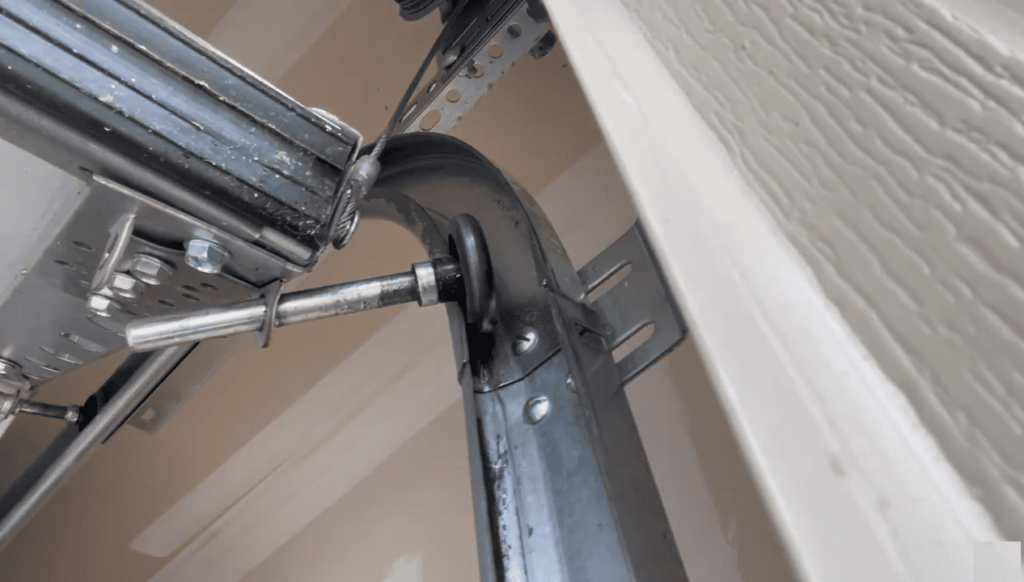
The radius is the curved track section that connects the vertical rail to the horizontal rail. It is the transition point where vertical motion becomes horizontal motion. The curve must be smooth and precisely engineered so the rollers can change direction without binding. A garage door track guide explains that most residential tracks use a 12‑ or 15‑inch radius. Smaller radii take up less headroom but require extra work from the operator motor to move the door through the tight curve.
Why it experiences high stress
- Force direction changes. In the radius, the rollers must simultaneously handle downward weight and sideways motion. This produces high friction and a prying force against the outer lip of the track. Any flattening or twisting of the curve can throw off the roller path and produce a sharp “clunk” every time the door passes that point.
- Precision engineering and tolerance. Because the radius controls the door’s transition, it is built with tight tolerances. Hammering the curve can distort these tolerances, leading to a misaligned track. The garage door track guide strongly advises not reusing bent or worn‑out sections and replacing both sides of a track for a balanced lift.
- Permanent deformation means weakened metal. When a curve is creased or pinched, plastic deformation occurs. Metallurgy research shows that plastic deformation permanently alters the grain structure of steel, reducing its strength and stiffness in the affected region. Once this happens, no amount of hammering will restore the track’s original load‑bearing capacity.
When a radius must be replaced
- Twisted or flattened curve: If the curved track is bent such that it has a flat spot or the roller jumps out, replacement is the only safe option. Attempting to force a bent radius back into shape can weaken the metal and cause future failure.
- Excess friction or clunking: A clunk sound or sudden jerk at the curve indicates that the rollers are encountering a damaged spot. Inspect for bends or misalignment. Because the radius is precision‑engineered, even a slight distortion can cause issues.
- Mismatch of radius and door type: Using an incorrect radius can strain the opener motor. A 12″ radius may require more force than a 15″ radius, so consult the manufacturer’s specifications.
5. Horizontal vs. Vertical Stress: A Side‑by‑Side Comparison
| Aspect | Vertical Rails (Compression) | Horizontal Rails (Suspension) |
|---|---|---|
| Function | Guide door up and down; initially support the door’s weight during lifting | Hold door panels overhead and allow horizontal storage once the door is open |
| Primary stresses | Compression from dead weight; vibration loosening brackets; corrosion at bottom from moisture | Tension and bending from suspended weight; dynamic forces from moving door; reliance on back‑hangs for stability |
| Typical problems | Sagging or crooked door; roller binding; rust and corrosion; weakened metal from bending | Spreading or sagging rails; fish‑tailing and side‑to‑side wobble; door collapse if rail fails; noise and jerky motion from misaligned back‑hangs |
| When repairs are possible | Minor dents not affecting roller channel can be gently hammered out; loose bolts can be tightened; surface rust can be cleaned | Slight misalignment or loose back‑hangs can be adjusted; minor outward flares can sometimes be straightened; ensure rails remain level |
| When replacement is required | Sharp creases or kinks in the vertical rail; severe corrosion; cracks; metal fatigue | Bent or twisted horizontal rails; loosened or broken back‑hangs that cause rails to sag; any split or shear in the track |
| Maintenance tips | Regularly inspect and tighten brackets; clean and lubricate rollers (not tracks); remove rust promptly | Check back‑hang bolts; ensure rails are level and parallel; avoid overloading; maintain clean track channels |
Maintenance and Professional Safety
The track system under your garage door carries out a balancing act between vertical and horizontal forces. Vertical rails must stand like the legs of a table, bearing hundreds of pounds of static weight. Horizontal rails act like a bridge, suspending the door above your head and carrying dynamic loads. The radius is the critical transition; any distortion here affects both the vertical and horizontal performance. Understanding these forces explains why a dent in one area might be harmless while a crease in another could be catastrophic.
Key takeaways
- Not all bends are equal. Small dents on the outer lip of a track or minor surface scrapes can often be straightened with a rubber mallet and wood block. Never strike steel directly with a metal hammer—this can break the zinc coating and invite rust. However, sharp creases, twists or bent radii require replacement, because plastic deformation weakens the steel’s load‑bearing ability.
- Inspect and maintain regularly. Look for rust, loose brackets, misaligned rails and unusual noises. Rust or corrosion on the rails is a clear sign they need replacement to prevent further damage or failure. Keeping the tracks clean and lubricating the rollers ensures smooth operation and reduces wear.
- Respect the horizontal rails. Because the door’s weight is suspended overhead, a bent horizontal rail is a serious hazard. Loose or misaligned back‑hangs can cause the rails to pull apart or twist, potentially leading to a door collapse. Always secure and level these rails and call a professional if you notice sagging or jerky motion.
- Understand the curve. The radius is precision‑engineered with a specific curvature (often 12″ or 15″). Flattening or twisting this section compromises the door’s ability to transition smoothly. Replacement is the safest option for a damaged radius.
When to call a professional
Working on garage door tracks involves heavy metal components under tension from the springs and cables. If you encounter severe damage, misalignment or a compromised radius, hire a professional garage door technician near you . Professionals have the tools and experience to replace entire track sections, adjust back‑hangs, and ensure the door operates safely. Remember that a garage door is more than a convenience—it’s a heavy moving wall that must be respected.