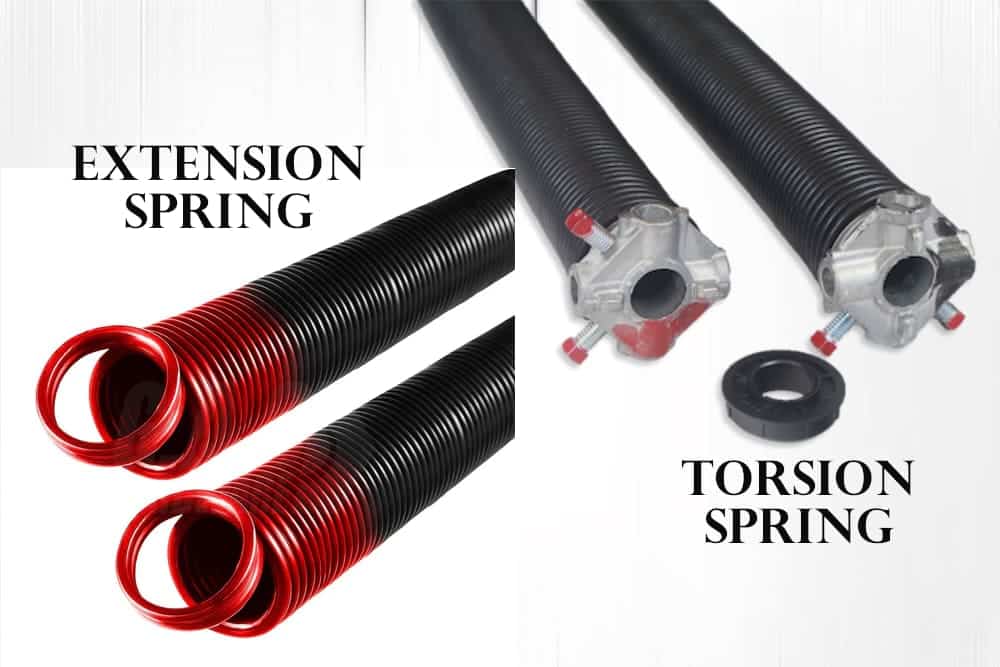
Garage door springs carry the heavy weight of your door, enabling it to open and close smoothly. Most residential doors use two torsion springs mounted on a shaft. These springs twist to store energy and counterbalance the door. When one spring snaps, many homeowners wonder if they can replace just the broken spring. However, professionals strongly recommend replacing both springs together. Springs are under high tension and can injure you if mishandled, so it’s always safer to hire an experienced technician. If you choose to do it yourself, make sure you have the proper garage door repair tools before starting.”
Spring Life and Balanced Wear
Torsion springs are rated for a certain number of cycles—one cycle equals one complete open‑and‑close. Standard springs usually last about 10,000 cycles, or seven to ten years. High‑cycle springs may last 20,000–50,000 cycles. Because both springs on your door were installed at the same time and have been used the same number of cycles, they accumulate equal wear and tear. When one spring fails, the other is nearing the end of its life. Leaving the old spring in place will likely result in another failure. Learn how to spot the top signs of a broken garage door spring before it snaps.
A new spring provides full rebound, while an old spring has lost much of its tension. Mixing a brand‑new spring with a fatigued one creates uneven load distribution. The stronger spring carries more weight and wears faster, while the weaker spring continues to deteriorate. Replacing both springs keeps the system balanced and ensures that each coil provides equal force.
Door Balance and Performance
Springs not only lift the door; they keep it balanced. When one spring is older than the other, the door may tilt or run crooked as it opens and closes. An unbalanced door might slam shut unexpectedly, drift upward or move unpredictably. These behaviours increase wear on rollers and hinges and can cause cables to jump off drums if this happens, follow our guide on how to fix garage door cables safely.. Uneven tension also forces the garage door opener to work harder. Motors are designed for balanced loads; strain from an unbalanced door can shorten their life or strip gears. Balanced springs make the door move smoothly, reduce noise and protect the opener.
Additionally, unbalanced doors place lateral stress on the track, causing misalignment and potential damage. Replacing both springs restores symmetry to the system and prevents premature wear on other components.
Cost and Convenience
At first glance, replacing a single spring seems cheaper than paying for two. In reality, it often costs more in the long run. Because both springs have the same cycle count, the surviving spring will likely fail soon, requiring a second service call. Each visit means setting up tools, unwinding the springs and reinstalling them—a time‑consuming and dangerous process. Labour and call‑out fees add up quickly. Installing new springs as a pair avoids paying for two separate repairs. For a full breakdown of expenses, see our Garage Door Spring Replacement Cost Guide.
It also prevents indirect costs such as damage to the opener caused by uneven tension and reduces the chance of a sudden failure that could dent your car or injure someone. If you upgrade to high‑cycle springs, you may not need another replacement for a decade or more, adding further value.
Safety Considerations
Safety is perhaps the most compelling reason to replace both springs. Garage door torsion springs are wound under hundreds of pounds of torque. A fatigued spring can break unexpectedly, causing the heavy door to slam shut or violent recoil of metal hardware. Mixing a new spring with an old one increases vibration and stress on the weakened spring, raising the risk of failure during operation or adjustment. When a spring snaps, it can damage vehicles, hurt people or send fragments flying. Balanced new springs reduce the chance of a sudden drop and keep the door steady. Old springs can also loosen from their brackets and fall.
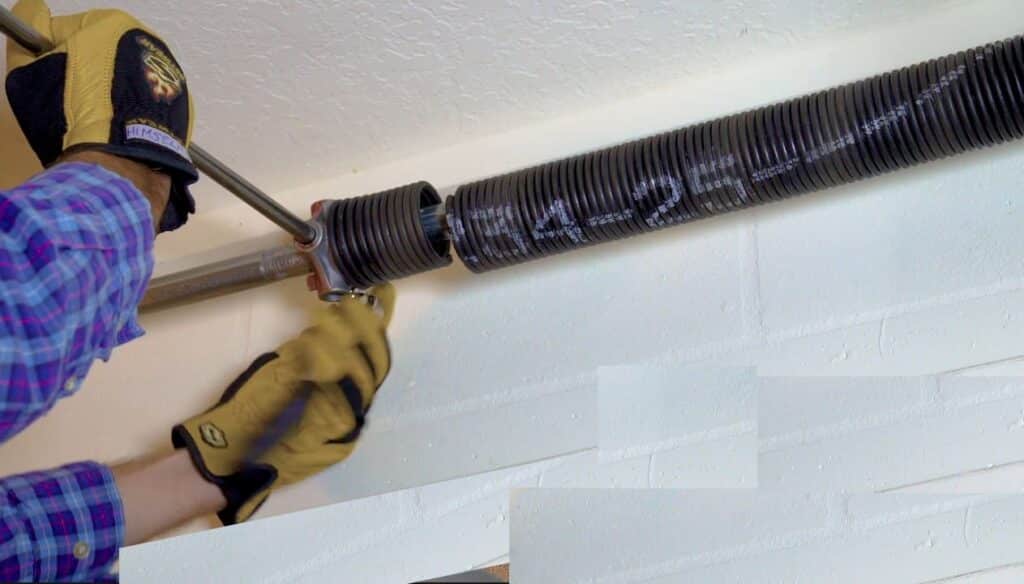
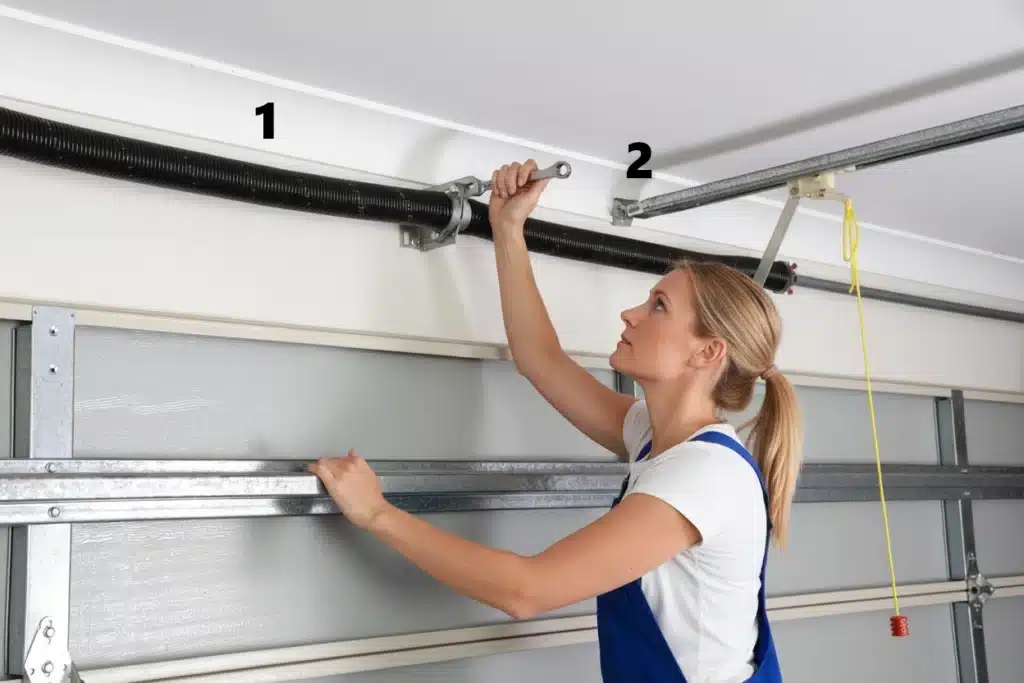
The safer choice is to have a trained professional perform the replacement. They know how to secure the shaft, use the correct winding bars and set proper tension. DIY attempts without proper tools often lead to injuries. It’s not worth risking your safety or property to save a few dollars.
⚠️ Critical Safety Warning: Never attempt to wind or unwind a torsion spring using screwdrivers or rebar. Only use hardened steel winding bars to prevent violent recoil.
Replacement Best Practices
When replacing springs, accurate sizing is vital. Springs must match your door’s weight, length and wind direction. Working with a professional ensures the correct choice; many homeowners opt for high‑cycle springs for added longevity. Proper tools are essential—hardened steel winding bars that fit the winding cones, sturdy locking pliers, gloves and safety glasses. Never use screwdrivers or rebar because they can slip. After installation, the technician will wind each spring the correct number of quarter turns and test the door’s balance; a balanced door stays at waist height when lifted manually.
Regular maintenance extends spring life. Apply a silicone‑based lubricant to the coils a few times a year. We’ve reviewed the 10 best garage door lubricants to help you choose the right spray for your system. and inspect them for rust, gaps or misalignment. Scheduling periodic professional inspections helps catch issues early and ensures that your door remains safe and quiet.
Below is a simple chart showing typical cycle ratings and approximate life spans:
| Spring Type | Typical Cycle Rating | Approximate Lifespan* |
|---|---|---|
| Standard torsion spring | ~10,000 cycles | 6–10 years for moderate use |
| High‑cycle torsion spring | 20,000–50,000 cycles | 12–30 years (depending on usage) |
*Lifespan estimates assume 2–4 uses per day; heavy use shortens life.
Conclusion
Replacing garage door springs is not a trivial repair. Springs carry the full weight of the door and are rated for a finite number of cycles. Because both springs wear out together, the second spring will soon fail if only one is replaced. Installing a new spring beside an old one causes uneven tension and accelerates wear on the opener and hardware. Replacing both springs at the same time ensures balanced operation, prevents accidents and saves money on future repairs. Always trust this job to a qualified professional. A dual spring replacement resets the clock on your door’s lifting system and gives you peace of mind every time you press the opener.
Always trust this job to a qualified professional. A dual spring replacement resets the clock on your door’s lifting system and gives you peace of mind every time you press the opener. If you aren’t comfortable handling high-tension springs yourself, find a reliable expert by searching for professional garage door repair near you to ensure the job is done safely and correctly.”