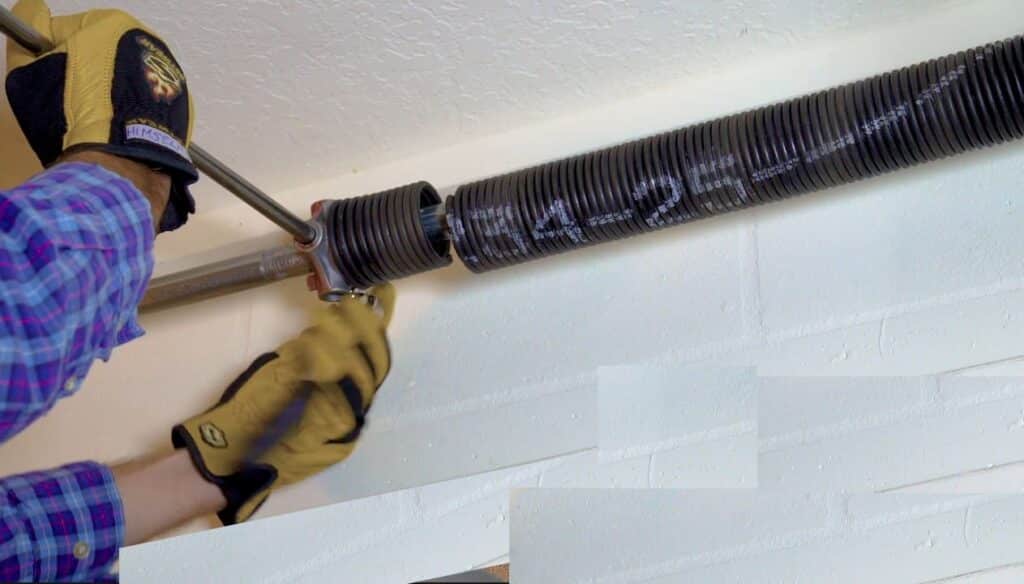
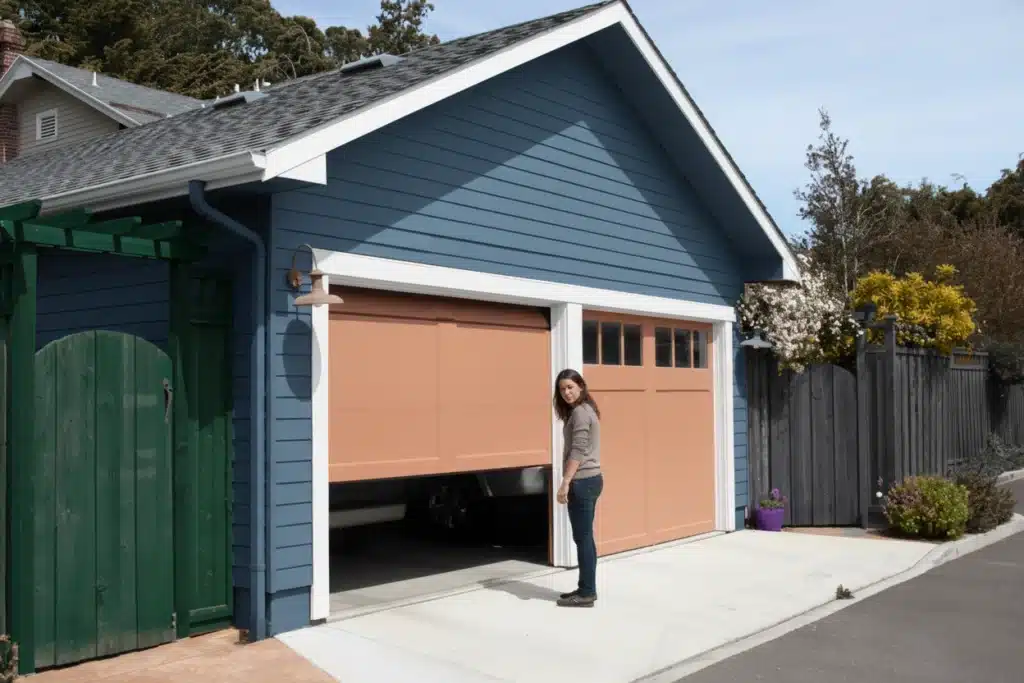
An open garage door isn’t just an inconvenience – it’s a serious security liability. A garage door left open, even due to a broken spring, is practically an open invitation to intruders and pests. Beyond security, an open door with a broken spring can also pose safety hazards, since it may fall suddenly without warning. Therefore, closing and securing the door is a top priority for protecting your home. However, closing a garage door with a broken spring must be done with extreme caution. Before attempting anything, double-check that the issue is indeed a broken spring (look for a visible gap in the spring or a loud snap noise) and not some other obstruction.
(For more on diagnosing spring issues, see our complete spring repair manual.) Once you’re certain the spring is broken, proceed carefully using the guide below – and never attempt to force the door closed blindly, as that can cause injury or damage.
The Danger: Why You Can’t Just Pull It Down
Garage doors are extremely heavy – often between 130 to 400 pounds – and the only reason they usually open and close with ease is the counterbalancing force of the springs. When a spring is broken, that counterbalance is gone, and the door’s full weight is at the mercy of gravity. Simply trying to yank or pull the door down by yourself is incredibly dangerous. In fact, without the spring’s support, the door can slam shut or free-fall like a guillotine, potentially causing severe injury or property damage. Manufacturers explicitly warn that a garage door with a broken or weak spring can “fall rapidly and unexpectedly,” creating a high risk of serious harm.
This sudden drop is often referred to as the “guillotine effect” because of how forcefully the door can come crashing down.
Importantly, do not be tempted to use the automatic garage door opener to close the door in this state. The opener is not designed to bear the full weight of the door without spring assistance and could fail catastrophically – burning out the motor or even snapping parts of the opener. In short, never just pull the door down or hit the opener button when a spring is broken. The combination of the door’s weight and gravity can create a dangerous situation in a split second. If you’re still not 100% sure your spring is the problem, check our guide on 5 Signs Your Garage Door Spring is Broken before proceeding.
(Warning: One garage door manufacturer’s safety instructions emphasize that if the door is open with a broken spring, it could drop unexpectedly, and no one should be underneath or in the door’s path when you’re handling it.)
Step-by-Step: Closing the Door Safely
Closing a garage door with a broken spring requires patience, the right technique, and preferably some help. Rushing can lead to accidents, so take your time and follow these steps carefully:
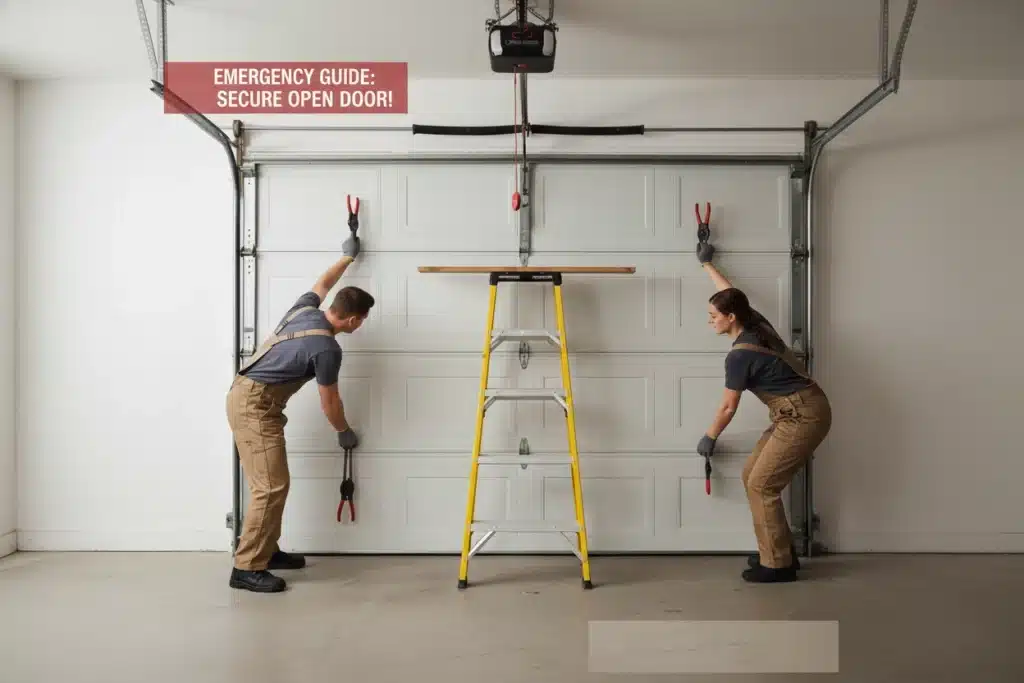
Notice how they maintain a controlled descent with one person on each side; having extra help provides better control and prevents the door from free-falling. This kind of teamwork and caution is critical when closing a door with a broken spring, given the door’s weight and tendency to drop quickly.
1. Cut the Power to the Opener:
Begin by disconnecting the power to your garage door opener. Unplug the opener unit (or switch off the circuit) to ensure it doesn’t try to activate unexpectedly while you’re working. This prevents any accidental button presses from the remote or wall switch that could set the opener in motion while the door is unsecured.
2. Pull the Emergency Release Cord:
Locate the red emergency release cord hanging down from the opener rail. With the door preferably in its fully open position, firmly pull the red cord straight down. This action disengages the door from the automatic opener, switching the door into manual mode. Make sure the area around and under the door is clear of people and objects before pulling the release. Do not use the red cord as a means to pull the door closed – its purpose is only to disconnect the opener, not to support the door’s weight.
Using the cord to yank the door can be dangerous (the rope could snap or you could lose balance). So, once it’s disengaged, move on to manually handling the door itself.
3. Enlist a Helper and Position Yourself Safely:
Do not attempt this alone if possible. Without the spring, a garage door is extremely heavy and unwieldy, so having at least two adults on the job is highly recommended. One person should stand at each side of the door (outside the door’s path), gripping the lower section of the door. Make sure you are not standing directly under the door, but rather to one side, slightly offset from the middle. This stance protects you if the door were to suddenly drop – you won’t be caught underneath it. Communicate with your helper so you lift and lower in unison. Use a stable, wide stance for balance.
Remember, teamwork is key here: the door might weigh several hundred pounds now, and balancing that weight evenly on both sides will make the process safer and smoother.
4. Lower the Door Slowly (Controlled Descent):
With a firm grip on the door’s bottom edge, begin to lower the garage door manually in a slow, controlled manner. This is the most crucial step – take it inch by inch. Brace yourself and lift with your legs (not your back) as you ease the door downward. Expect the full weight of the door to become apparent as you lower it. Do not let it drop fast under any circumstances. It helps to exhale and tighten your core muscles as you bear the weight, using your legs to squat down slowly.
Never let go of the door midway! The moment you release tension, the door can plummet with full force, which could not only destroy the door panels or floor but also seriously injure anyone nearby. If you start to lose your grip or the door feels too heavy, do not try to heroically stop it with your body. Instead, get out of the way immediately and let it fall – better to have a damaged door than a personal injury. (This is where having a helper is invaluable, as they can help share the load and control the descent.)
5. Secure the Door Once It’s Closed:
After a careful descent, the garage door should now be closed fully against the ground. Do not leave it in a halfway position – always bring it all the way down. With the door closed, it’s now disconnected from the opener and unpowered, meaning anyone could potentially walk up and lift it open from the outside. To secure your home, you must lock the garage door manually. There are two common ways to do this:
- Slide Bolt Lock: Most garage doors have an interior slide lock or latch – a manual deadbolt-like mechanism on one of the door’s vertical tracks. Engage the slide lock if you have one, by sliding the latch into the corresponding hole in the track, which will lock the door’s rollers in place. Once engaged, test it gently: the door should not lift more than an inch or two.
- C-Clamp or Vice-Grip on the Track: If your door lacks a built-in lock or you want extra security, grab a sturdy C-clamp or a pair of locking pliers. Clamp it tightly onto the metal track just above one of the rollers on each side. By clamping above a roller, you physically block the door from moving upward. Even if someone tries to lift the door from outside, the clamp will hit the roller or track bracket and prevent the door from opening. This trick essentially acts as a temporary lock. (For added measure, you can use two clamps – one on each side.) Remember to remove these clamps before operating the door again with the opener, after repairs.
At this point, your garage door is closed and cannot be easily opened from the outside, restoring the security of your home. Do not reconnect the automatic opener yet – leave it disengaged (via the red cord) until the spring is fixed. Reconnecting the opener and trying to use it now could strain or damage the opener since the spring is still broken.
If you actually need to get your car out before closing the door, see our guide on How to Manually Open a Garage Door with a Broken Spring.
How to Lock the Door Once It’s Closed (Security)
(You’ve just closed the door manually and used clamps or the slide lock to secure it. This section recaps and emphasizes securing the door, since a closed door is only as secure as its lock.)
Once closed, your door is not locked. Pulling the emergency release cord means anyone can lift the door from the outside. To secure your home, you must:
- Engage the Slide Bolt: Slide the interior manual lock into the vertical track.
- Use a C-Clamp: If you have no manual lock, tighten a C-clamp or vice-grip onto the track directly above a roller to block the door from moving up.
- Unplug the Opener: Disconnect the power so the motor doesn’t accidentally try to lift the heavy door if someone hits a remote button.
Bottom Line: A closed door is only secure if it’s physically locked. Don’t skip this step!
When to Stop: Is the Door Jammed or Off-Track?
Not every door can be closed manually. If the spring break has caused the door to become crooked, angled, or misaligned, stop immediately. Forcing a jammed door can bend the tracks or buckle the panels, turning a simple spring fix into a very expensive repair.
Do NOT attempt to close the door if:
- It’s Crooked: One side is visibly higher than the other.
- Off-Track: Rollers have popped out of the metal rails.
- Loose Cables: Steel cables are dangling, tangled, or snapped.
The Danger: A door that is off-track or has broken cables can collapse without warning or cause a cable to whip violently. If you see any of these “red flags,” secure the area, keep people away, and call a professional technician immediately.
Secure Now, Repair Next
By following these steps, you’ve successfully secured your home and averted the “guillotine” risk of a falling door. However, remember that this is only a temporary fix. Your garage door is currently non-functional and unsafe for regular use.
Important Next Steps:
- Keep it Locked: Leave the door closed, the opener unplugged, and the manual locks (or clamps) engaged.
- Don’t DIY the Repair: Garage door springs are under extreme tension. Replacing them is dangerous and requires professional tools.
- Call a Pro: Now that your home is secure, your final step is a permanent repair.
Find a trusted technician in your area through our Garage Door Repair Near Me page to get your door balanced and back in working order today. Stay safe, and don’t risk injury by forcing a broken door.