A garage door may look like a simple panel of wood or metal, but its movement relies on a pair of powerful torsion springs hidden above the door. These springs are mechanical devices designed to store rotational energy; they make a 150‑300 lb door feel nearly weightless and allow it to glide along its tracks with the push of a button. Because they are under extreme tension when the door is closed, mishandling them can unleash the stored energy in a split second.
This article explains why you should never loosen or adjust torsion springs without the correct tools and training. If you are looking for a complete guide on maintenance, replacement, and troubleshooting, visit our Garage Door Springs: The Ultimate Pillar Guide. Below, we explore the physics behind these components, the dangers of using improvised tools, the injuries that can occur, and the collateral damage that improper handling causes.
The Science of Stored Energy
The “loaded gun” analogy
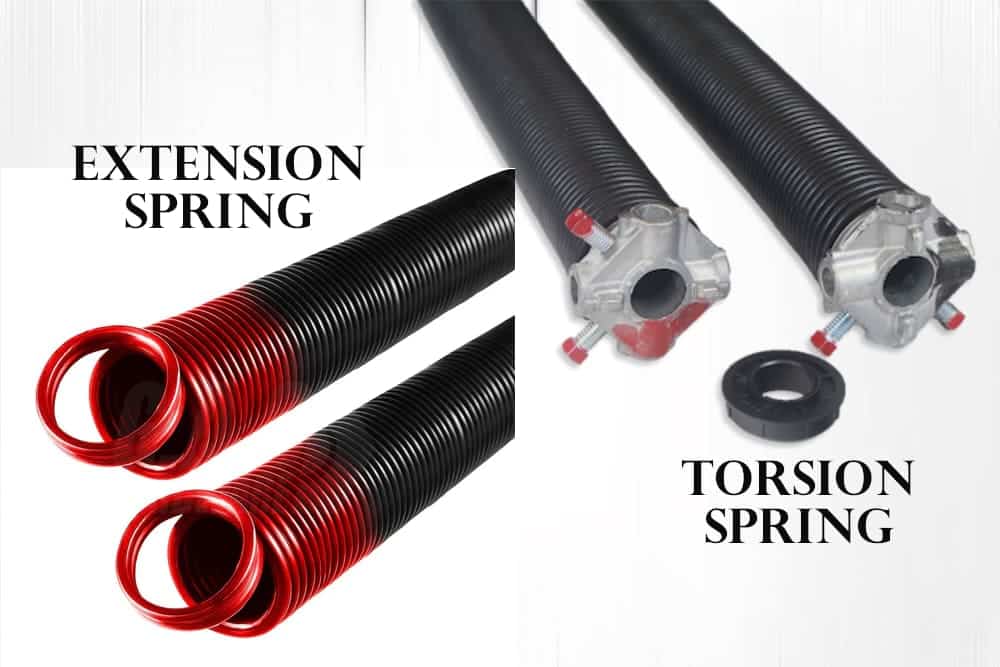
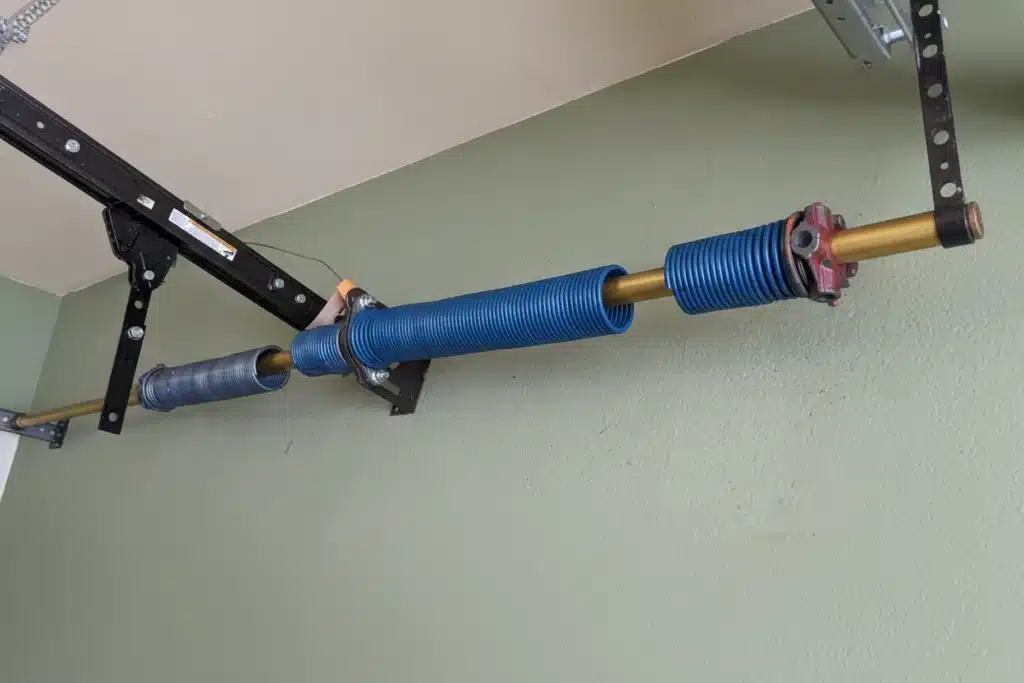
Torsion springs operate by twisting the coil around a steel shaft. When the door is closed, the springs are wound to their maximum number of turns and are under high tension. This stored energy is released when the door is opened, assisting the motor or a person in lifting the door. Torsion springs are tightly wound coils of high‑tensile steel designed to store rotational energy; on a residential overhead door they are mounted on a shaft above the door opening. Because an average residential garage door weighs 130–300 lb (even more for custom wood doors), manual lifting would be impractical without the spring’s assistance.
The springs act as a counterbalance, essentially replacing hundreds of pounds of gravitational potential energy with controlled torsional energy that can be released smoothly.
The weight factor
The stored energy in torsion springs offsets the weight of the door so effectively that you can lift a 200 lb door with one hand. Door installers size torsion springs by door weight; if the spring loses tension, the door feels heavy and may not stay halfway open. When you loosen the set screws that hold a torsion spring to the shaft, you take over control of that energy. All the torque that was contained by the spring and anchor plate is instantly transferred to whatever tool is in your hand. Without proper preparation the bar can spin violently or the spring can unwind uncontrollably, delivering the force of a falling 150‑400 lb door directly to your fingers, face or head.
The Danger of “Substitute” Tools (the screwdriver trap)

Why screwdrivers fail
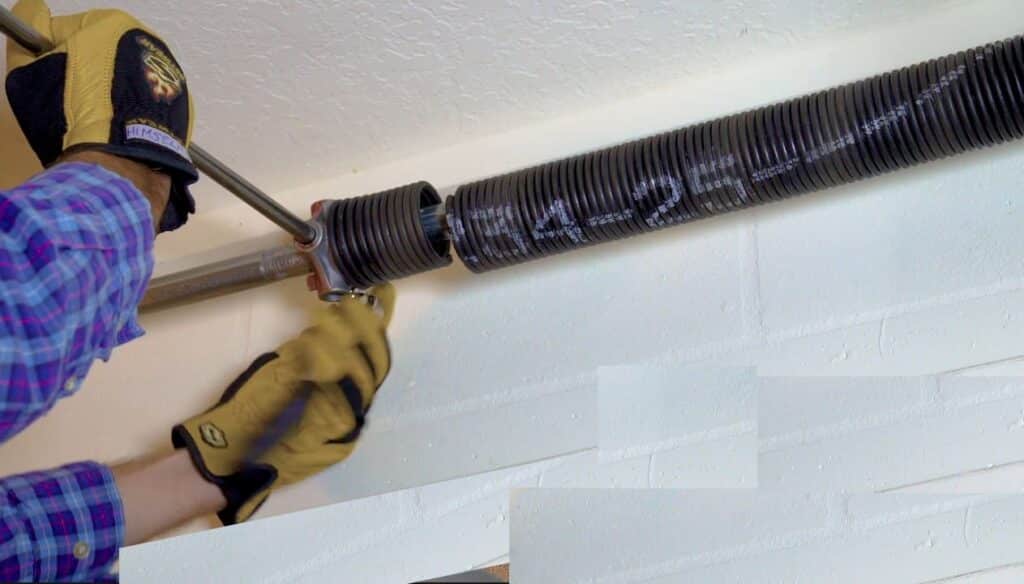
Many homeowners consider using a flat‑blade screwdriver, a rebar, or even pliers to wind or unwind torsion springs. This is a critical mistake. Professional instructions from Clopay specify that winding bars must be ½‑inch diameter, 18‑inch long cold‑rolled steel; the manual warns that “the use of any other object can result in severe injury”. Because screwdrivers are not made from high‑tensile steel and are often shorter than 18 inches, they bend or snap under the torque of a wound spring. An article on the safety of torsion spring adjustments notes that screwdrivers will bend or snap under the torque; when they do, they become projectiles.
Using a poor‑fitting tool is just as dangerous. Winding cones have holes drilled at precise diameters to accept winding bars. If the tool is too small or tapered, it can slip out of the hole, allowing the spring to unwind violently. The Door and Fence Store cautions that these springs are typically under hundreds of pounds of torque; a tool slipping from the winding cone or a poorly secured bracket could lead to snapped metal and severe injuries. Professionals therefore use proper winding bars that fit snugly, eliminating play and reducing the chance of a slip.
The fit issue and engineering of winding bars
The length and material of a winding bar are not arbitrary; they are engineered to provide the correct leverage and strength. Solid steel bars that are 0.5 inches in diameter and 18 inches long fit most residential torsion spring cones. The length gives enough leverage to control the torque while keeping hands at a safer distance from the spring. Winding bars are typically 18 inches long and 0.5 inch in diameter and are made of solid steel; some include non‑slip handles for better grip. It is critical to stress the importance of using two bars simultaneously to distribute tension evenly and minimize the risk of injury.
Without a snug fit and correct length, the bar can spin or be ripped from your hands when the spring releases. If your door is making strange noises due to tension issues, consult our Garage Door Noise Dictionary to identify the sound.
Potential Physical Injuries

High‑velocity impact
When improvised tools slip, they turn into high‑speed projectiles. The safety guide from Door‑and‑Fence Store warns that the wrong tool can easily become a projectile. Spectrum Overhead Door’s article on DIY dangers notes that if a winding bar slips, the spring unwinds violently and the bar becomes a spinning metal club. The OHDC Texoma guide adds that a screwdriver bending under torque becomes a projectile capable of breaking bones or shattering a car window.
These impacts can cause broken fingers, facial fractures and head injuries. The Kooler Garage Doors blog describes how forcing a stuck door can cause the door to slam down with the force of a sledgehammer and notes that broken springs or cables can lash out like a whip. It also lists injuries such as crushing injuries, cuts, fractures, head and neck trauma, and eye injuries caused by flying metal fragments. Emergency rooms routinely treat such injuries, and some accidents result in permanent disability or worse.
Lacerations, pinch points and soft‑tissue injuries
Torsion springs and cables contain sharp edges and create pinch zones. The gaps between door panels, rollers and hinges become entrapment zones; misalignment can turn these narrow spaces into shearing edges that can cut skin or bone. A snapping cable can whip back with violent force, causing lacerations or puncture wounds. A snapping cable acts like a whip; heavy doors falling due to a snapped cable can crush hands or limbs. To keep these parts in top condition, refer to our list of the Best Garage Door Lubricants.
Collateral Damage to the System
Shaft and drum damage
Torsion springs are mounted on a steel shaft with cable drums at each end. When a spring loses control, this shaft can bend or the drums can slip, causing the entire door to fall sideways or come off its tracks. Improper winding can misalign the drums and produce uneven tension across the door. The Door and Fence Store warns that torsion springs rely on precise placement of the cable drums, shaft and mounting hardware; any misalignment can cause uneven tension, jerky movement or loud noises. If one side of the door pulls harder than the other, cables can slip off the drums, causing the door to jerk or drop suddenly.
Snapped cables
Lift cables wind around drums as the door opens and closes. The Shelton Garage Door Center article notes that garage door cables are heavy‑duty steel wires designed to handle incredible tension and that they work hand‑in‑hand with torsion springs. Over time they wear, and old cables can snap without warning. The article emphasises that when a cable breaks, a 150‑400 lb door can slam down, damaging a car or injuring anyone underneath. It also describes how a snapping cable can whip back violently, causing severe injury on contact. This risk increases during improper spring adjustments because releasing tension too quickly transfers shock into the cables, causing them to jerk or break.
Property damage
When the system fails, the heavy door can slam down, damaging vehicles, floors, walls or garage contents. A heavy door can crash down if there is too little tension, and over‑tensioned springs can cause the door to fly open uncontrollably. This uncontrolled motion can send the door off its tracks, bending panels or breaking windows. Additionally, snapped springs or cables can create flying debris that breaks lights or windows. For homeowners, the cost of repairing a bent track, damaged panels and broken opener parts quickly eclipses the cost of a professional service call. If you are stuck with a door that won’t move, follow our guide on How to Safely Close a Stuck Garage Door.
Why Professional Winding Bars Are Mandatory

Engineered for torque and safety
Professional winding bars are engineered to safely transmit the torque required to adjust torsion springs. Clopay’s instructions specify that winding bars must be ½‑inch diameter and 18 inches long, made of cold‑rolled solid steel. The manual warns to always use good‑quality, snug‑fitting, constant‑diameter steel winding bars when adjusting springs; using any other object can result in severe injury. These bars insert fully into the holes on the winding cone, ensuring that the bar cannot slip out when torque is applied. The length gives the technician leverage while keeping hands a safe distance from the spring.
Winding bars are tools made of solid steel, typically about 18 inches long and 0.5 inch in diameter. Some bars feature non‑slip handles for extra grip. Because they are engineered for torque, they do not bend or flex under load, providing predictable control. Without a proper bar, the torque cannot be safely controlled, making it nearly impossible to adjust the spring without risking injury.
The double‑bar technique
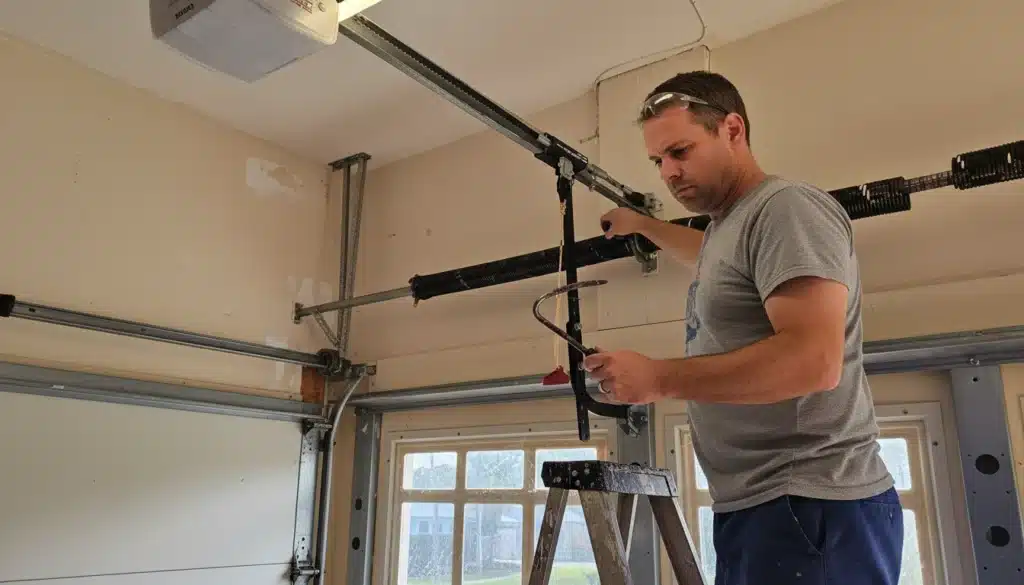
Professional technicians use two winding bars in a “leapfrog” motion. The technician inserts one winding bar snugly into the winding cone and only then loosens the set screws. Using two bars, they release or add tension a quarter‑turn at a time, maintaining continuous control. It is essential to insert one winding bar firmly into a winding cone hole; while holding it, insert the second bar into the next hole and never let go of a winding bar. This ensures that the spring is always held by at least one bar; if one bar were removed before the other is fully inserted, the spring could unwind violently.
If you have a broken spring and need to get your car out, read our emergency guide on How to Safely Open a Garage Door with a Broken Spring.
Additional safety tools
Professionals also use locking pliers or clamps to secure the door in the closed position and prevent it from lifting unexpectedly. They mark the shaft and drums to monitor alignment and use socket wrenches to tighten set screws to the correct torque. Heavy‑duty gloves and safety glasses protect hands and eyes from sharp edges and flying debris. Without these additional tools, even proper winding bars cannot eliminate all hazards. When combined with training and experience, however, they allow technicians to safely manage the immense forces involved.
The Cost‑vs‑Risk Assessment
Some homeowners attempt DIY torsion spring repair to avoid a service fee, but the risk is far greater than the savings. Garage door torsion springs are essentially “loaded weapons” storing enough energy to lift a multi‑hundred‑pound door. Improvised tools such as screwdrivers bend, snap or slip, turning into projectiles capable of breaking bones or shattering windows. Misadjustment can bend shafts, misalign drums, cause cables to snap like whips, and send the heavy door crashing down. The potential injuries include crushed limbs, lacerations, fractures, head trauma and eye damage. The cost of an emergency room visit or property repairs far outweighs the fee for a professional garage door technician.
A simple way to assess whether your torsion springs need service is to perform a balance test: disconnect the opener, lift the door halfway, and see if it stays in place. If the door drifts down or shoots up, the spring tension is incorrect and professional adjustment is required.
Do not attempt to add or remove tension yourself. For a detailed, step-by-step walkthrough on how to perform this check correctly, refer to our comprehensive Garage Door Balance Test Guide. Even routine maintenance, such as lubricating the springs and inspecting cables, should be done with the door in a safe, neutral state and without touching the torsion system. To ensure you are using the right products for this task, see our review of the Best Garage Door Lubricants.
Final call to action
If you suspect your garage door springs are out of balance or worn out, perform the quick balance test described above. Should the door fail the test—or if you notice frayed cables, gaps in the coils, or hear loud popping noises—resist the urge to tighten or loosen the springs yourself.
Saving a little money is never worth risking serious injury or property damage. By respecting the science of stored energy and the need for proper equipment, you ensure that your garage door operates safely and reliably for years to come.
Don’t take the risk alone. If you need immediate assistance or professional maintenance, find a certified Garage Door Repair Expert Near You to handle the heavy lifting safely. Our team is equipped with the right tools and expertise to restore your door’s balance without the DIY danger.