When a garage door wire snaps, it can feel like the entire heart of your home has suddenly stopped. Most residential garage doors weigh between 130 and 400 pounds, and the lift cables work together with springs and drums to make that weight manageable. When one cable fails, the door becomes dangerously unbalanced.
In this guide, you’ll learn exactly what to do immediately after a wire breaks. However, if you are looking for technical specifications, maintenance tips for other components, or a full overview of the system, be sure to visit our comprehensive Garage Door Cable & Pulley Repair Master Guide. Quick action matters to avoid expensive track or motor damage, and understanding how the counter‑balance system works is your first step toward a safe repair.
Warning: Garage doors are heavy and the torsion or extension springs that help lift them store extreme tension. A frayed or broken cable often indicates deeper issues with springs, pulleys, or tracks. Attempting DIY repairs without proper tools and training can be extremely dangerous. If in doubt, always call a professional garage door technician.
Why Does a Garage Door Cable Matter?
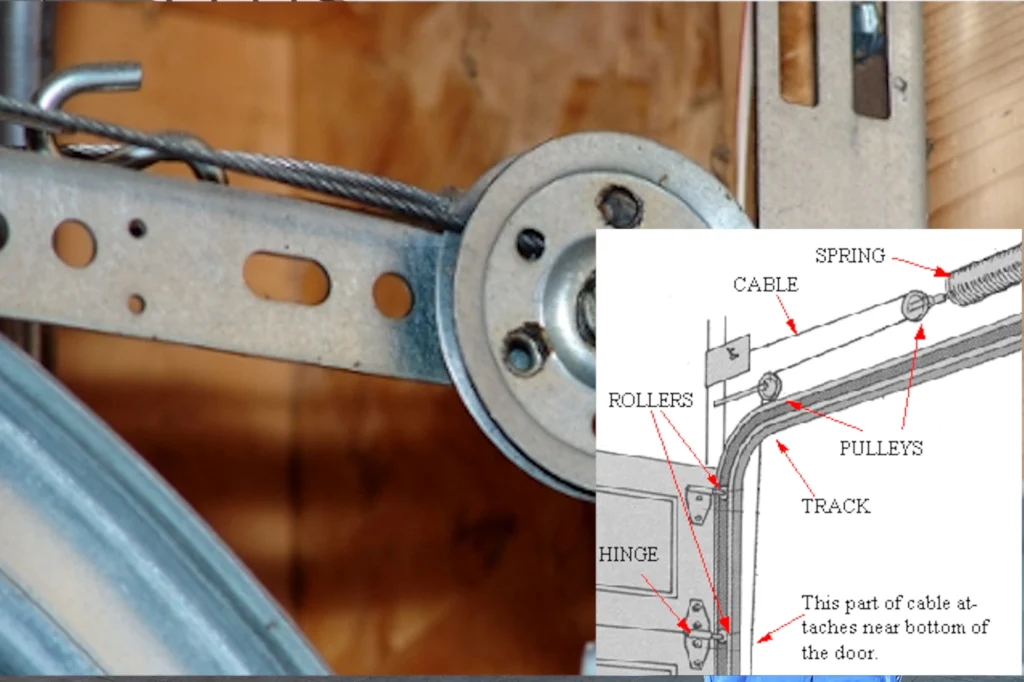
Most overhead garage doors use a counter‑balance system that includes springs (torsion or extension), pulleys, drums, and lift cables. When you press the opener, the motor turns a shaft connected to the drums, winding or unwinding the cables. These cables act like muscles, lifting and lowering the door evenly on both sides. If one cable snaps or comes off its drum, the balance is gone. All the door’s weight shifts to the remaining components, stressing the tracks, rollers, and opener motor.
Multiple sources warn that operating a door with a broken cable is dangerous because the door is now imbalanced and the remaining cable is under double tension. Overhead Door Huntsville notes that continuing to use the opener could strip the drive gear or cause the door to crash down. California Garage Repair adds that a snapped cable throws off the door’s balance and strains the tracks, springs, and opener.
Below are the three essential steps you must follow the moment you notice a cable failure. These steps are written to prevent further damage, keep everyone safe, and set you up for a smooth repair.
1. Stop All Operation Immediately (Do Not Touch the Opener)
When you hear a loud snap or see that a broken garage door cable is dangling, your first instinct might be to hit the wall‑mounted button or remote to close or open the door. Resist that urge. A snapped cable means the door is no longer evenly balanced. If you try to run the opener, you’ll force the motor to pull on one side only. The results can include:
- Bent or twisted tracks. Garage door tracks are designed for even pressure. Pulling one side warps them and can cause the rollers to jump out.
- Burned‑out motor or stripped gear. The opener motor may overheat or strip its plastic drive gear because it cannot handle the uneven load.
- Sudden door crash. With only one cable or a partially frayed cable bearing the load, the door could drop unexpectedly. Same Day Garage Door Services warns that using the door when cables are frayed or broken could send the door crashing down.
What to Do
- Stop using the opener. Release your finger from the remote or wall switch immediately. Do not press any buttons again until a technician has fixed the issue.
- Unplug the opener. California Garage Repair recommends cutting power by unplugging the opener or switching off the circuit breaker to prevent anyone accidentally pressing the button. This also protects the motor from damage due to repeated attempts.
- Leave the door as it is. If the door is halfway open or stuck at an angle, do not try to assist it up or down. Overhead Door Huntsville stresses that forcing a door closed when cables are broken could twist panels or misalign the tracks. Keeping the door motionless preserves the remaining hardware until it can be stabilized.
What Not to Do
- Do not pull the red emergency release cord unless the door is fully closed. The emergency release disengages the door from the opener, allowing manual operation. Precision Garage Door warns that pulling this cord when the door is up and a spring or cable has broken can cause the full weight of the door to crash down. Always check that the door is closed and there are no broken springs or cables before using the release.
- Do not lift or lower the door manually. A garage door can weigh several hundred pounds. Without two healthy cables and correctly tensioned springs, the door may be impossible to control. Trying to lift it can lead to back injuries or dropped door panels.
- Do not try to rewind the cable onto the drum. California Garage Repair lists this as a common mistake; rewrapping a loose or broken cable without addressing the underlying cause (worn springs or pulleys) can make it worse.
Stopping all operation protects the opener and prevents further structural damage. It also buys you time to assess the situation and contact a professional.
2. Secure the Area (Safety First)
After halting any operation, your next job is to protect people, pets, and property from the risk of a falling door. When a cable breaks, the remaining cable (if it hasn’t snapped already) must support the entire door weight. Overhead Door Huntsville explains that broken cables transfer extra tension to the remaining cable, and using the door could cause it to snap and send the door crashing down. You need to reduce this risk.
Clear and Protect the Zone
- Keep everyone out of the garage. Ask children and pets to stay away from the door area. A falling door can cause serious injury or crush anything underneath.
- Move vehicles or possessions if safe. If your car is under the door and the door is stuck open, do not drive it out. The movement of the garage floor could jar the door. If the door is fully open and stable (rare), you might be able to slowly drive out, but only after a professional has secured the door. In most cases, leave the car and call for emergency garage door service.
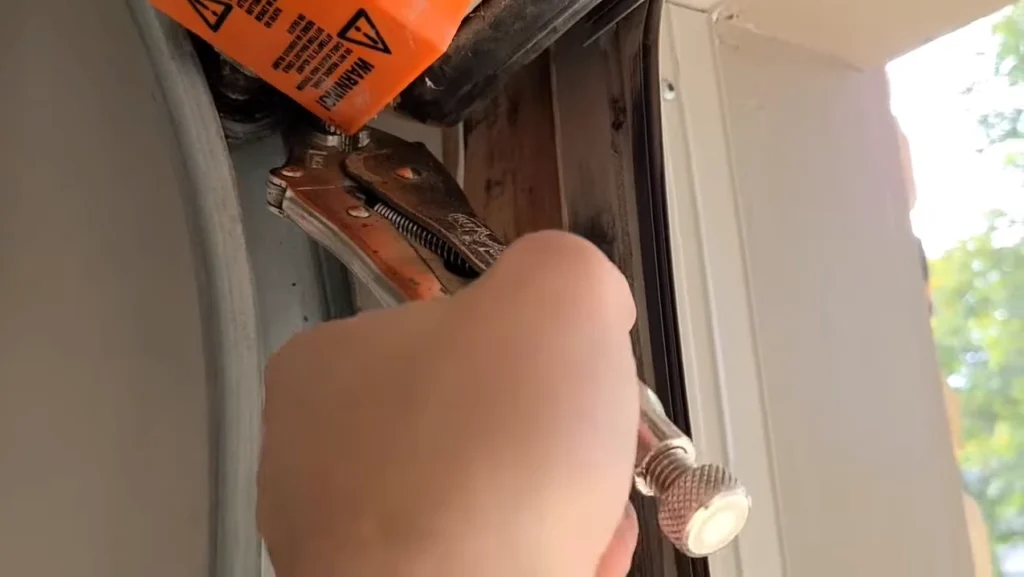
- Do not remove safety supports. If you notice clamps or C‑clamps holding the track or door in place, do not remove them. California Garage Repair suggests using locking pliers or C‑clamps under the lower roller to prevent the door from falling. This should be done by someone experienced; if there is already a clamp, it likely serves as the only safety barrier.
Why You Shouldn’t Use the Emergency Release
Many homeowners think the red emergency cord will help them lower the door slowly. This is a misconception. Without cables and springs providing tension, pulling the release disconnects the door from the opener, leaving nothing to support it. Precision Garage Door notes that pulling the cord when the door is not firmly down can cause the door to crash, and Overhead Door Huntsville says misaligned tracks, broken springs, or damaged cables make manual operation extremely risky.
Calling for Help
Once the area is secure and the opener unplugged, call a qualified garage door technician. Hire Authority warns that it is not safe to operate a door with a broken cable and recommends contacting professionals immediately. Describe the problem and mention whether the door is stuck in an open position. Many companies offer emergency support because leaving the door half‑open poses security risks.
3. Inspect the Counter‑Balance System (But Don’t DIY Repair)
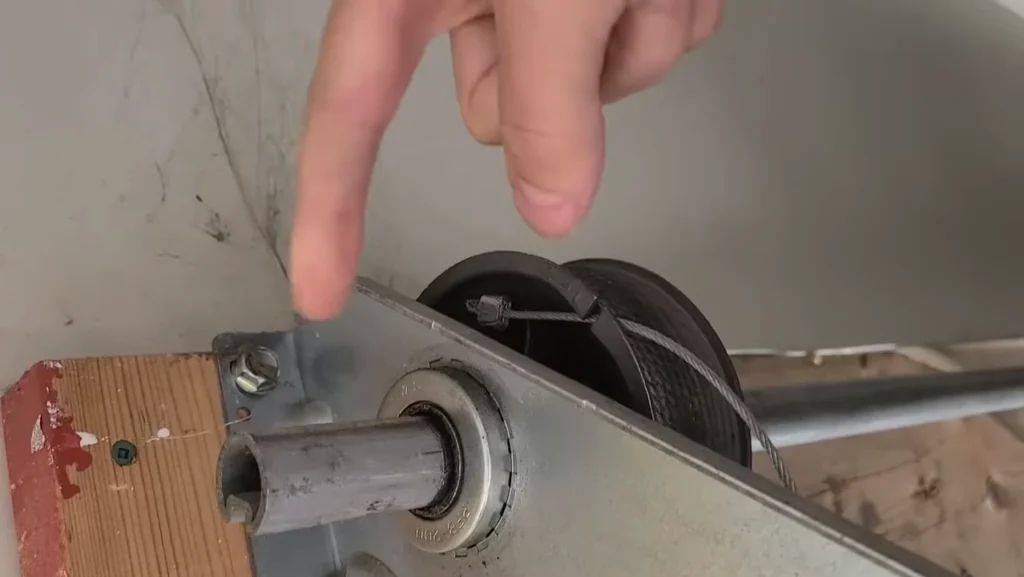
While waiting for a technician, you can perform a visual inspection from a safe distance. Knowing what failed helps you communicate the issue accurately. Do not attempt to remove or adjust any part of the counter‑balance system; these components are under high tension.
3.1 Check the Cables
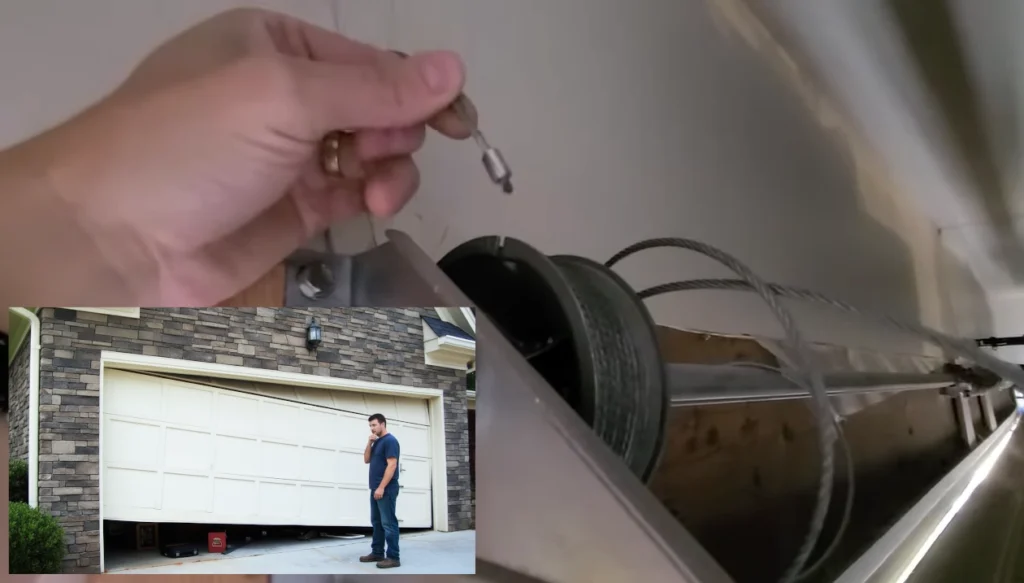
- Identify which cable snapped. Look at both sides of the door. Did the garage door cable break on one side, or is the cable simply off the drum? Sometimes the cable isn’t snapped but has come loose or tangled. If it’s still attached, the technician may be able to rewind it after addressing the underlying issue. If one cable has snapped, assume the second cable is also near failure. Hire Authority emphasizes replacing both cables because the other one has likely experienced the same wear and tear.
- Look for fraying. Use a flashlight to inspect the remaining cable. Frayed steel strands or rust indicate that the cable has been rubbing against something or exposed to moisture. Overhead Door’s blog notes that failing pulleys or misaligned tracks can cause the cable to rub, leading to fraying.
3.2 Check the Springs
Broken or weak springs are a common cause of cable failure. Torsion springs run horizontally across the top of the door, while extension springs stretch along the horizontal track on either side. A snapped spring typically produces a loud bang and causes the door to feel extremely heavy. Trinity Garage Doors explains that when springs or cables break, the door can slam shut, causing damage to tracks and opener. If you see a gap in a torsion spring or a visibly broken extension spring, note it for the technician.
3.3 Check the Pulleys and Drums
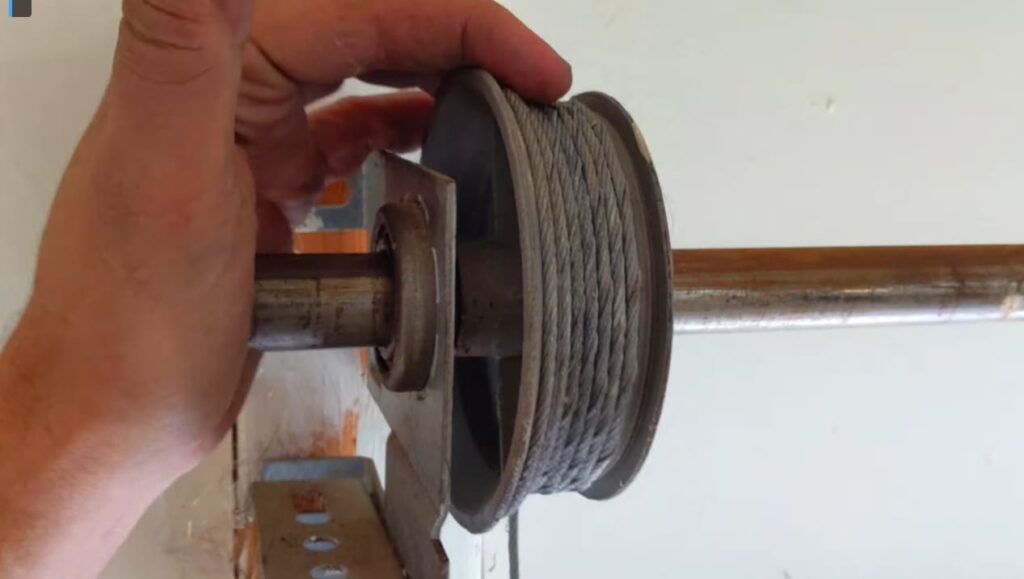
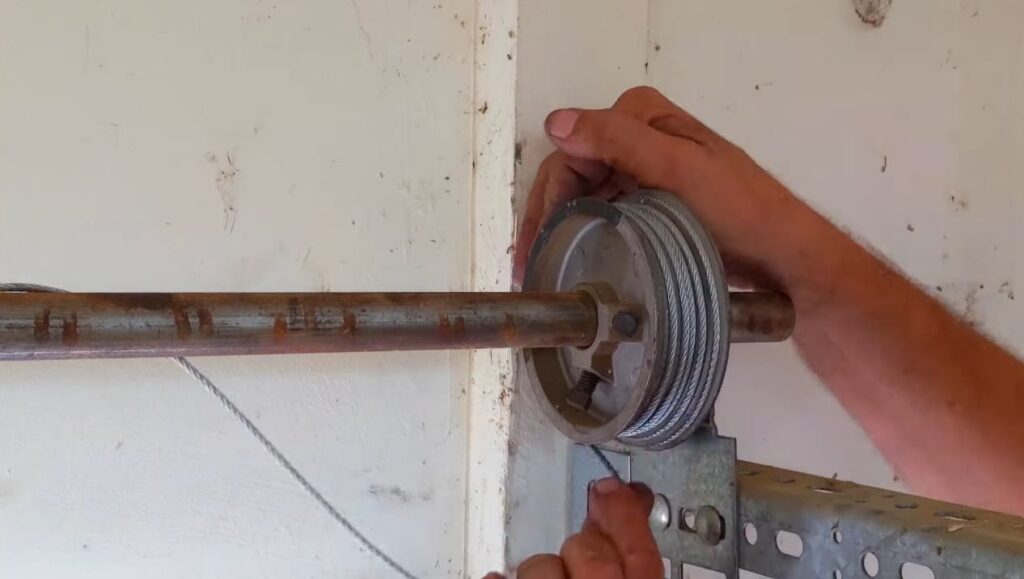
Each cable winds around a drum at the top corner of the door. Extension‑spring systems also use pulleys to route cables. Over time, pulley bearings wear out and the metal wheel can scrape the cable. DDM Garage Doors notes that a frayed or broken cable may be the first symptom of a failing pulley, and ball bearings can seize, causing the pulley to rub and fray the cable. Inspect the pulleys visually; if they look rusty or crooked, that could be the culprit.
3.4 Check the Tracks and Rollers
Misaligned or bent tracks put extra strain on cables and springs. Action Overhead Door points out that misaligned tracks, rough pulleys, poor cable sizing, broken springs, and general wear can lead to cables snapping. Look for gaps between the rollers and tracks, or signs of rubbing. Gaps indicate that the door has shifted and is no longer riding smoothly. If rollers are worn or have broken bearings, they can cause the door to bind.
3.5 Causes of Cable Failure (Pro‑Tip Box)
Why did it break?
• Normal wear and tear: Cables flex and unwind thousands of times over their life. Eventually the steel strands fatigue.
• Rust and moisture: Steel cables exposed to water corrode and weaken.
• Broken springs: When a spring snaps, the cable on that side experiences an immediate slackening or surge of tension, leading to unraveling.
• Worn pulleys or bearings: Failing pulleys scrape cables and fray them.
• Misaligned tracks: A door that’s off track can pinch the cable and make it come off the drum.
• Improper cable sizing or installation: Using incorrect cables or routing them over sharp edges accelerates wear.
– Pro tip: Always replace both cables at the same time. According to garage door professionals, if one cable is broken or frayed, the other has likely endured the same stress and is close to failure.
How the Counter‑Balance System Works
Understanding the mechanics behind your garage door helps you appreciate why cables are so important and why proper repair matters.
Torsion Spring System
Most modern sectional doors use a torsion spring system. A metal shaft sits above the door and holds one or two torsion springs. At each end of the shaft are drums—grooved wheels that the cables wrap around. When the door is closed, the torsion springs are under maximum tension. As the door opens, the springs unwind, transferring energy to the cables. The cables lift the door panels evenly, and the springs provide the counter‑balance force to offset the door’s weight.
Extension Spring System
Older doors and some lighter single‑car doors use extension springs along the horizontal tracks. Each spring attaches to a pulley system that routes the cable from the bottom bracket on the door up through a pulley and back to the front of the horizontal track. When the door is closed, the extension springs are stretched. As the door opens, the springs contract, pulling the cable and lifting the door. DDM Garage Doors warns that worn pulleys are a major failure point in extension systems because ball bearings can seize and cut into the cable.
Regardless of the spring type, the cables connect the door to its counter‑balance energy. Without the cables, there is nothing to control the weight of the door.
When to Replace Instead of Repair
If your garage door cable broke on one side, you might wonder whether to just replace that single cable. Most professionals advise replacing both cables and any worn components to prevent recurring issues. Here’s why:
- Equal wear. Cables operate in pairs; each cycle subjects both to similar stress. A snapped cable signals that the other is near the end of its life.
- Cost efficiency. Replacing only one cable may seem cheaper now, but if the second fails soon after, you’ll pay another service fee. Replacing both at once ensures the cost to fix a garage door wire is a one‑time expense.
- Safety. New cables should be paired with a visual inspection of springs, pulleys, drums, and bearings. Worn pulleys or bent brackets must be addressed simultaneously to prevent premature wear on the new cables.
Signs You Need More Than Cable Replacement
- Broken or rusty springs. If the springs are visibly broken or rusted, they need replacement because new cables cannot function correctly with failing springs.
- Distorted door panels or tracks. Bent sections, gaps at the bottom, or rollers popping out require track realignment or panel replacement.
- Excessive noise. Loud grinding, squeaking, or banging indicates failing bearings or pulleys. These components should be replaced during cable service.
Preventive Maintenance: Avoid Future Breaks
Replacing broken cables is an immediate fix, but preventive care reduces the likelihood of another failure.
Annual or Semi‑Annual Inspection
Once or twice a year, schedule a professional garage door tune‑up. A technician will inspect cables, springs, pulleys, and rollers for wear, lubricate moving parts, and check safety sensors. Hire Authority recommends regular inspections to catch frayed cables early. MoJo Garage Doors warns that ignoring early signs of wear can lead to sudden failure and severe injury.
Lubricate Moving Parts
Lubrication reduces friction that causes fraying. Use a silicone‑based spray or white lithium grease (never motor oil) on:
- Cables and drums. Lightly mist the cables to reduce rust; wipe off excess.
- Pulleys and bearings. Lubricate the pulleys to help the bearings spin freely.
- Rollers and tracks. Greasing rollers prevents metal‑on‑metal contact that could pinch the cable.
Avoid spraying the springs directly; over‑lubrication can collect dirt. Instead, wipe them with a damp cloth and apply a light coating as recommended by your technician.
Keep the Area Dry
Water and salt from rain, snow, or vehicle undercarriage can corrode cables and springs. Sweep or squeegee standing water away from the door, and consider installing weather stripping to keep moisture out. If you live in a coastal area, inspect the cables quarterly for rust.
Watch for Signs of Trouble
Be vigilant for early indicators of a frayed garage door cable:
- Uneven closing or gaps at the bottom of the door.
- Sudden jerks or shaking while the door moves. Worn pulleys or misaligned tracks may be causing the door to bind.
- Visible fraying or rust on cables.
- Loud pops or bangs. Indicates a spring may have snapped.
Contact a professional as soon as you notice any of these issues. The small cost of preventive service is far less than the expense of replacing a collapsed door or burned motor.
Estimated Costs and Professional Repairs
Prices vary by region, door size, and cable type, but homeowners should expect the cost to fix a garage door cable to include:
| Component | Typical Cost (USD) | Notes |
|---|---|---|
| Cable replacement (pair) | $100 – $200 | Includes labor and materials. May be more for heavy or high‑lift doors. |
| Cable + spring replacement | $200 – $400 | Springs must be replaced in pairs. Torsion springs cost more than extension springs. |
| Full counter‑balance rebuild | $300 – $600 | Includes drums, bearings, pulleys, and cables. Necessary if multiple components are worn. |
| Service call fee | $50 – $100 | Many companies waive this fee if repairs are performed. |
Frequently Asked Questions
Discovering that your garage door wire snapped is alarming, but following the right steps can prevent injuries and costly damage. Immediately stop operating the door, secure the area, and call a professional. Then, visually inspect the counter‑balance system to understand what failed. Replace both cables and any worn components to restore balance. With regular inspections, lubrication, and moisture control, you can dramatically extend the life of your garage door cables.
By acting quickly and responsibly, you protect your family and your investment. A well‑maintained garage door operates quietly and safely, and by understanding the mechanics behind it, you can recognize early signs of trouble and keep your door running smoothly for years to come.