A garage door should glide up and down quietly. If yours makes a loud squeaking noise, it’s telling you something is wrong. Strange noises are often the first symptoms of worn components, improper adjustment, or a desperate need for maintenance—and ignoring them can lead to a costly, sudden repair.
This guide breaks down specific noise types, helps you pinpoint where they originate, and explains when a simple squeak becomes a major safety concern. Whether you need to master The Definitive Guide to Garage Door Springs or just need a quick fix, understanding proper lubrication and spring lifespan is essential so you know exactly when it’s time to call a professional.
1. The Garage Door Noise Dictionary
Not all noises are the same, and describing what you hear helps diagnose the problem. Here is a “dictionary” of common sounds and what they typically mean:
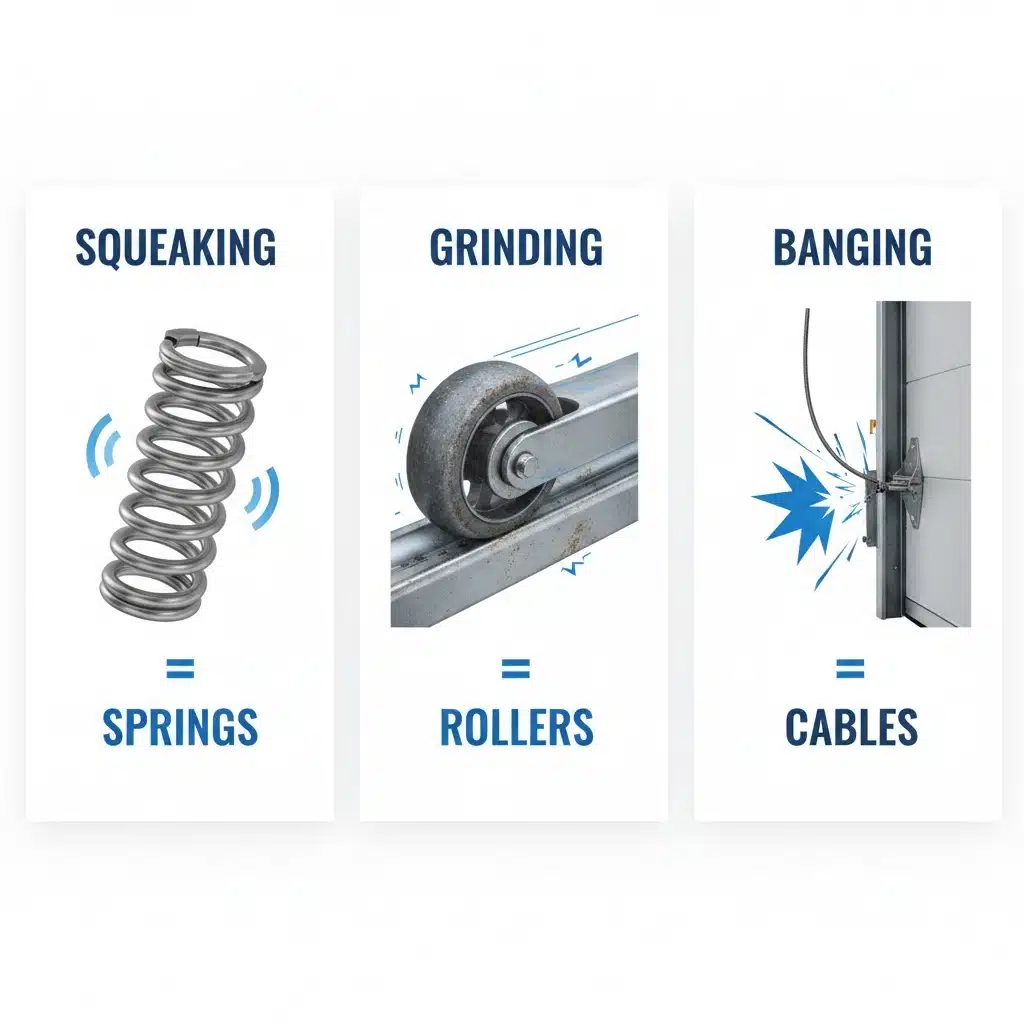
- Squeaking/Screeching: A high‑pitched squeak usually comes from metal rubbing against metal. Dry rollers or hinges create this friction. Industry maintenance standards note that squeaks often mean the lubricant has dried out or the parts are loose. Hinges, rollers, and torsion springs are “serial squeakers” because they pivot and contract with every cycle. Important: If your squeaking suddenly turns into a loud bang like a gunshot, the spring has likely snapped. Stop using the door immediately and check our guide on the 5 Signs Your Garage Door Spring is Broken to confirm the damage.
- Grinding: A grinding or grating sound usually signals worn rollers, a failing motor gear, or a misaligned track. These noises are not “normal wear and tear”; they signify excessive friction or misaligned parts. Grinding can also come from the opener’s drive chain or belt rubbing due to improper tension.
- Clanging/Slapping: Loud bangs or slapping noises often mean the door is unbalanced or a cable is loose. These are often considered an emergency because they indicate a severe spring imbalance. In extreme cases, a torsion spring can snap with a sound like a gunshot, releasing stored energy that causes the door to crash down.
- Rattling/Vibrating: Rattling often comes from loose hardware. Bolts and brackets can work themselves loose over time, and tightening them often stops the noise. Statistics show that loose bolts account for about 80% of common rattles.
2. Identifying the Source: Location Check
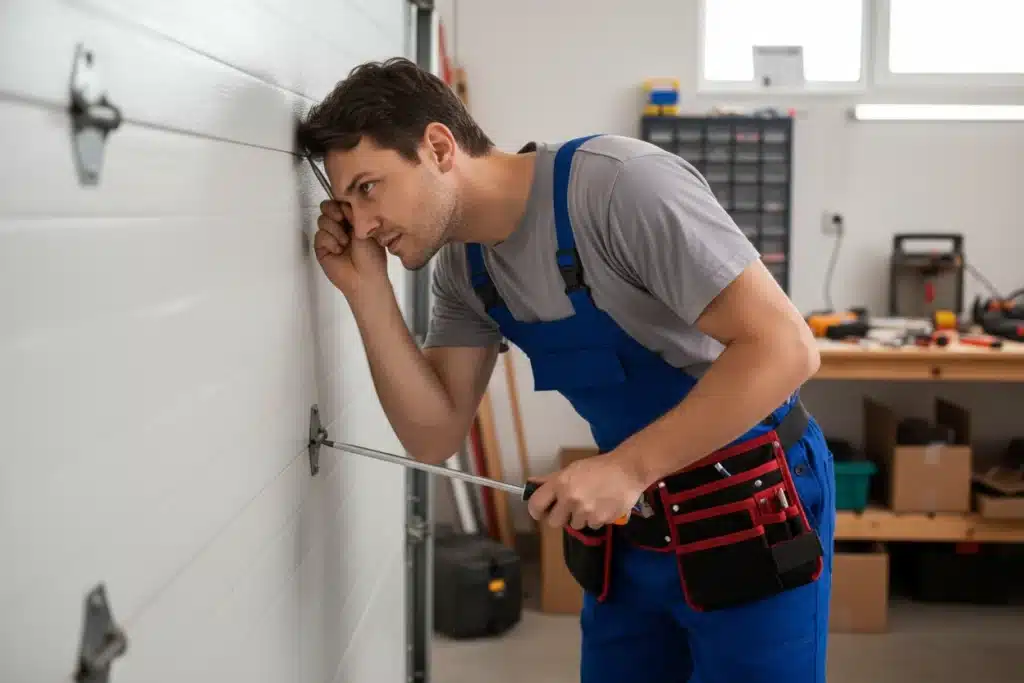
Once you’ve identified the type of noise, find its source. Stand safely inside the garage, close the door, then operate it while listening and watching:
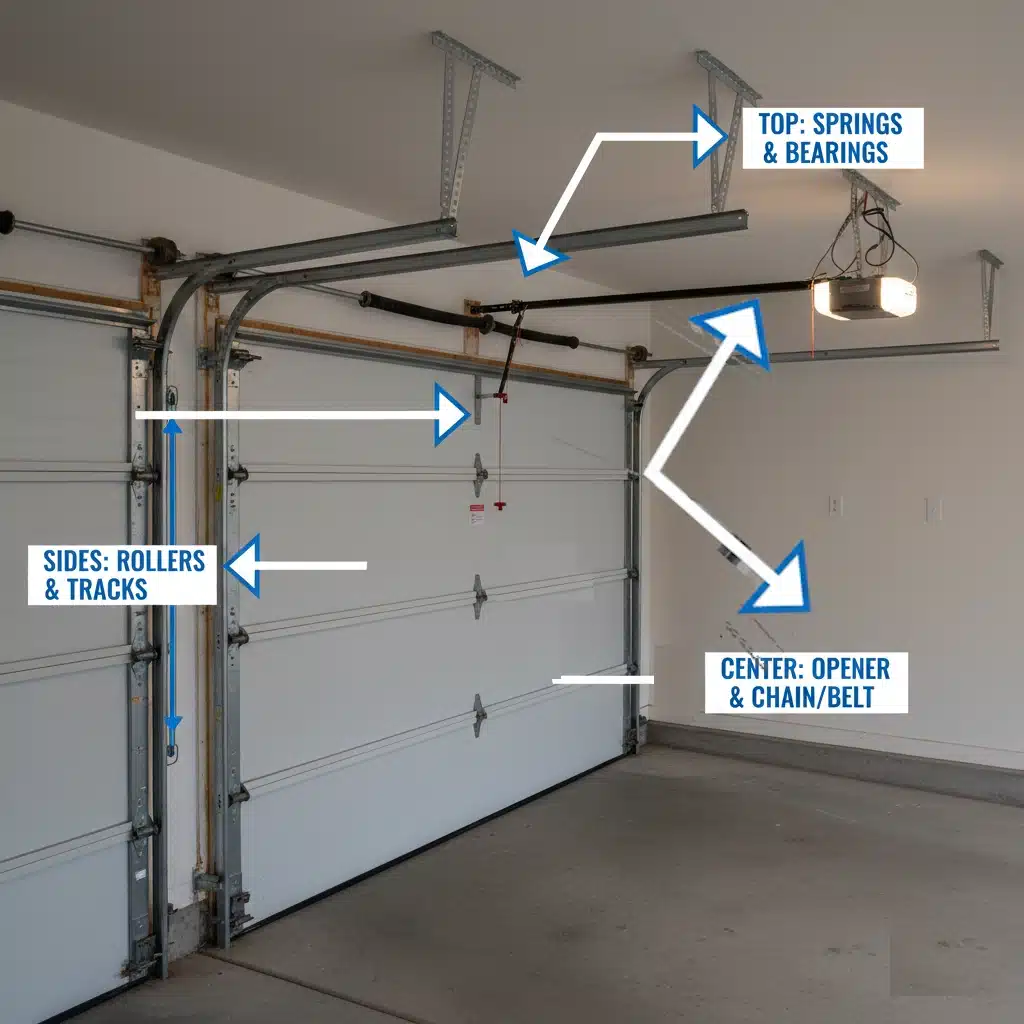
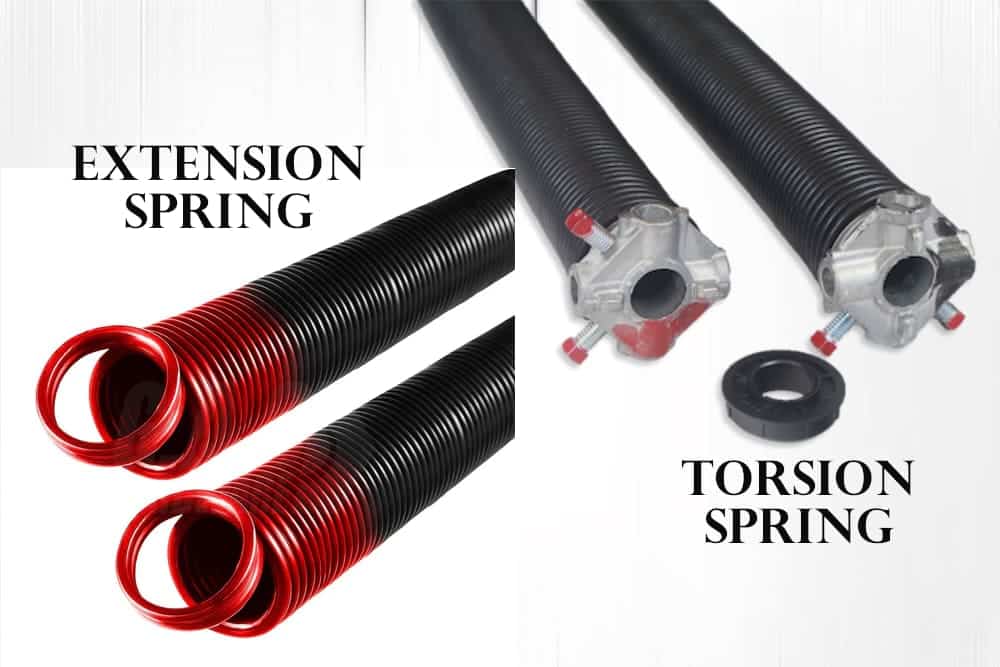
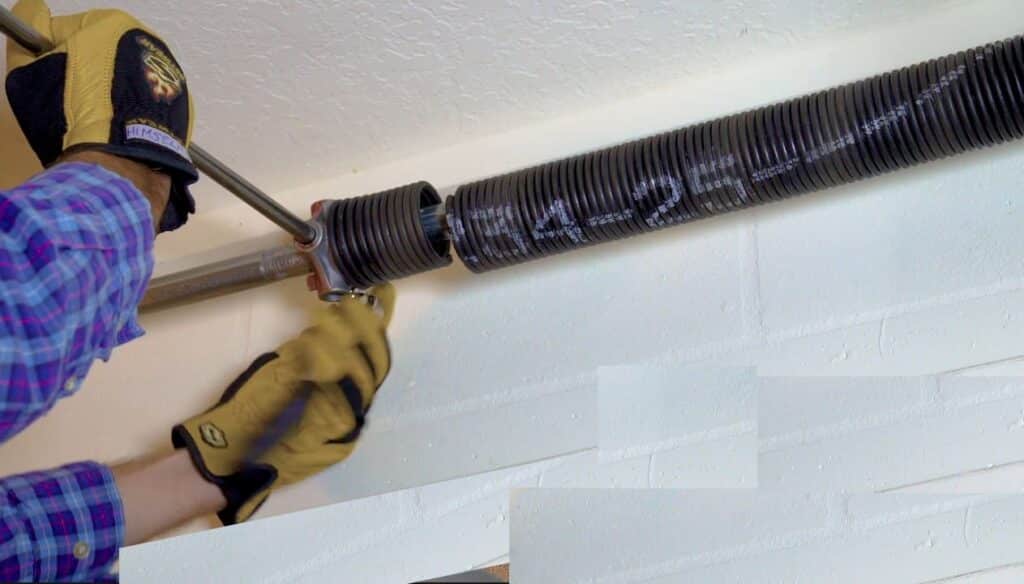
- Above the door: A squeak coming from the top is usually the torsion spring or its bearings. These springs coil and uncoil every time the door moves. Never spray lubricant on a torsion spring without extreme caution; springs are under high tension and can cause injury.
- Along the tracks: Squeaks or rattles along the sides typically originate from rollers. Worn steel rollers rust and create a high‑pitched squeak. Replacing worn rollers with nylon versions can reduce noise by 50% and last longer.
- Near the opener: If the noise seems centered over the garage, check the opener’s drive chain or belt. Grinding or rumbling may mean the chain is loose or the motor gear is wearing out.
Pro Tip: The easiest way to pinpoint the culprit is to disconnect the opener using the emergency release cord and operate the door manually. If the sound persists, it’s likely the door hardware. If the noise disappears, the problem may lie in the opener itself.
3. Red Alerts: When Noise Means Danger
Squeaks and squeals can be annoying, but some noises demand immediate attention:
- Noise + Difficulty Lifting: If your door is screaming and also feels heavy or won’t stay open halfway, the springs are likely losing their tension. This combination suggests a dangerous imbalance. To see if your system is still safe, perform a quick 2-Minute Garage Door Balance Test.
- Sudden Bang (Like a Gunshot): A loud crack followed by the door falling or refusing to open means a torsion spring has broken. This releases a massive amount of energy and can cause the door to slam down. Stop using the opener immediately and refer to our [5 Signs Your Garage Door Spring is Broken] guide.
- Persistent Squeaking After Lubrication: Springs have a finite life. Excessive noise after lubricating indicates “metal fatigue” and weakening steel. It is best to replace springs in pairs to maintain balance and avoid further strain.
- Grinding or Slapping with Jerky Movement: This could mean misaligned tracks or loose cables. These issues cause uneven tension and premature wear. Never adjust torsion springs yourself; they store hundreds of pounds of force.
4. The Lubrication Rule: Silicone vs. WD-40
Lubrication is the simplest way to silence a squeaky door, but using the wrong product makes things worse:
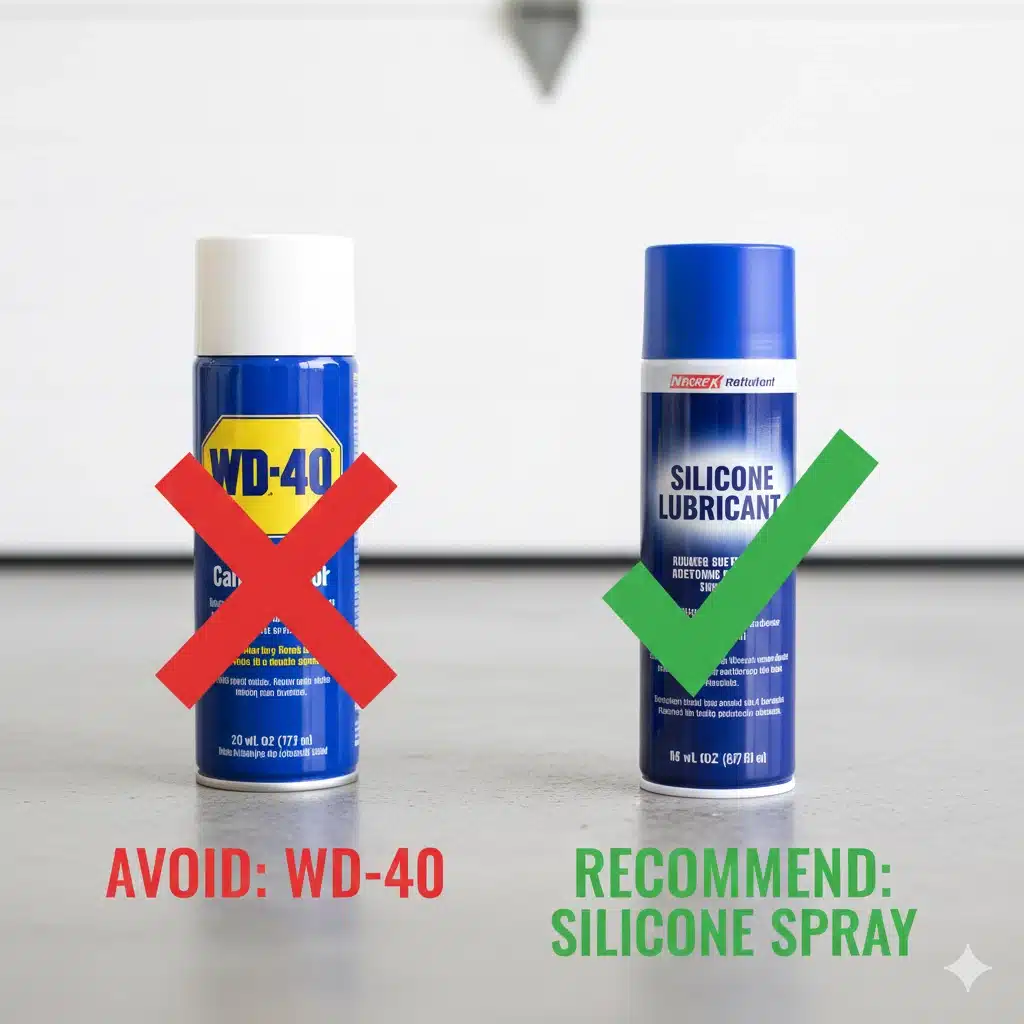
- Avoid WD-40: Popular petroleum‑based products such as standard WD‑40 attract dirt and debris, increasing friction. It acts as a water displacer and evaporates quickly, forming a sticky sludge that increases wear.
- Use Silicone or White Lithium Grease: Specialized lubricants penetrate tight spaces and leave a long‑lasting film. Use silicone sprays for hinges and rollers and white lithium grease for metal components exposed to temperature changes.
💡 Pro Tip: To help you choose the right formula for your climate and door type, we have tested and ranked the top products in our comprehensive guide: Top 10 Best Garage Door Lubricants to Buy in 2025.
- Clean Before Lubricating: Remove debris from the tracks with a damp cloth, but do not lubricate the tracks as this attracts grime. Use the straw attachment to direct spray into hinges and roller bearings.
- Lubricate Regularly: Experts advise maintenance every six months. Regular lubrication, along with tightening loose hardware, can reduce noise by up to 70%.
5. Understanding Spring Cycles and Lifespan
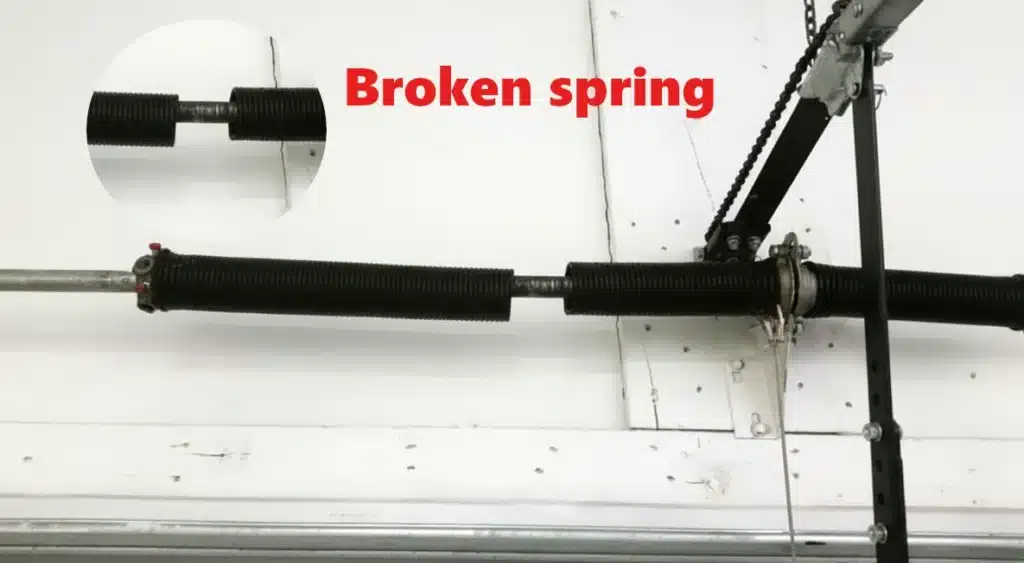
Springs are the muscles of your garage door. As they age, the metal fatigues and you may hear persistent squeaking, pinging, or snapping sounds. These often indicate uneven tension or microscopic cracking in the spring metal.
Most torsion springs are rated for about 10,000 cycles (7–12 years for many households). When they near the end of their lifespan, they lose tension, causing the door to feel heavy. If your door continues to squeak despite proper lubrication, the springs are likely at the end of their service life. Replacing them before they break protects your opener from burnout and prevents accidents.
Conclusion
A loud squeaking noise is more than a minor annoyance—it’s a message. By classifying the sound and locating its source, you can take timely action. Remember that persistent squeaks often mean your springs are reaching the end of their life; start by performing a 2-Minute Garage Door Balance Test to check their health. If the noise continues, contact a Garage Door Repair Expert Near You to ensure your system is safe, silent, and reliable.