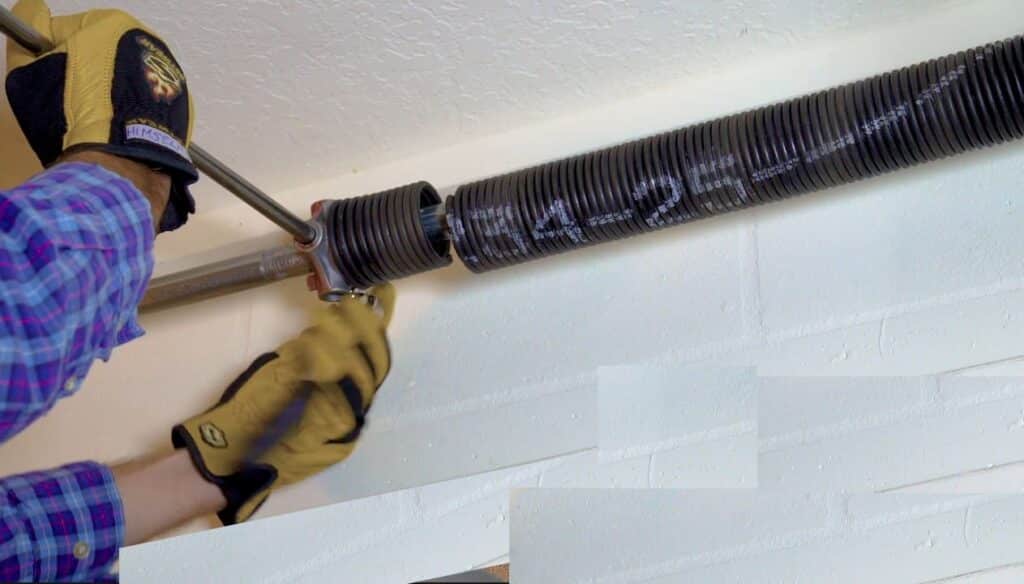
A garage door uses springs and cables to counterbalance its weight so that it glides easily along the tracks. When those components are in good condition, you can lift the door with one hand and it will stay where you put it. This delicate system of tension and physics is the heart of your door’s operation; for a deeper look at how these parts work together, visit our Garage Door Spring Guide.
If the balance is off, the opener is forced to lift “dead weight,” which strains the motor and makes the door drift down or slam shut unexpectedly.
Why balance matters
A balanced door distributes its weight evenly so the opener and springs share the loads. When the system is out of balance, the opener works against gravity and wears out faster. Signs of trouble include a crooked or noisy door or one that feels heavy on one side.
Step 1 – Disconnect the opener
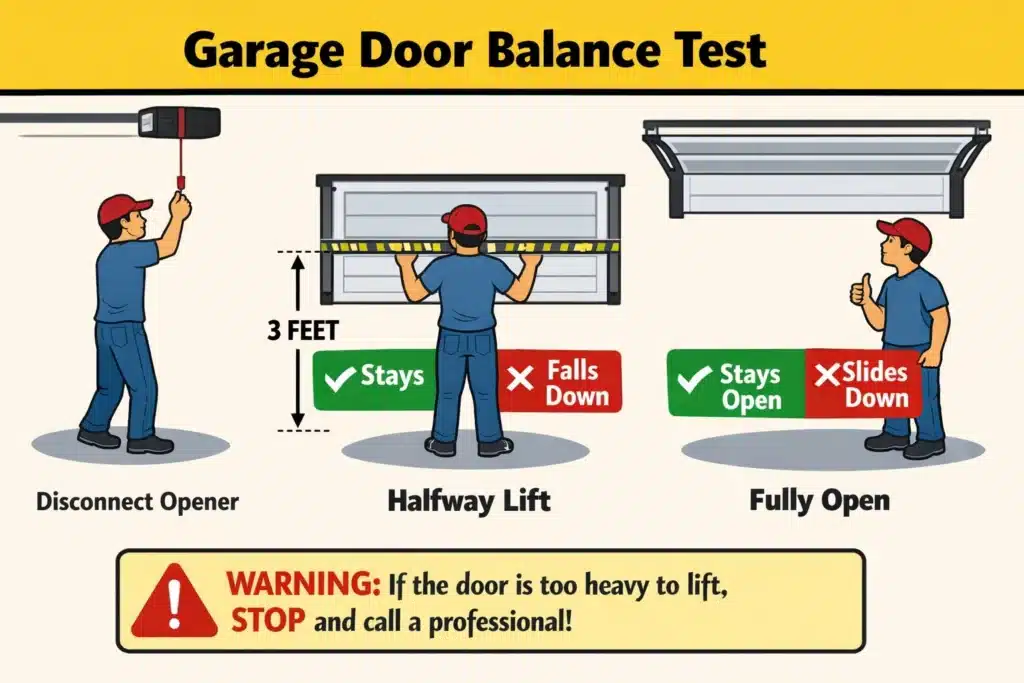
Begin by closing the garage door fully. Pull the red emergency‑release cord to disconnect the trolley from the opener carriage. This allows you to move the door manually. Never pull the release while the door is open; if the springs are weak, the entire door can crash to the ground.
Step 2 – Lift the door halfway
Stand inside the garage and raise the door to about waist height. Let go and watch. A balanced door will hover in place or drift very slightly. If the door slides down or slams shut, the springs have lost tension. If you notice this happening, you should immediately check for other Signs of a Broken Garage Door Spring to confirm if a replacement is needed.
Step 3 – Open it fully
Next, lift the door all the way up. In a balanced system the door should stay in the fully open position without support. If it slowly rolls back down toward the floor or pushes against the stops, the balance is off and the opener should not be used until the springs have been inspected.
Don’t force a heavy door
Failing either of these tests means the door is unsafe to operate. Do not keep pressing the wall button or remote. Continuing to run an unbalanced door strains the opener and can burn out the motor. Springs and cables are under extreme tension and can cause serious injury if they snap. Adjusting torsion or extension springs requires special winding bars and knowledge. If you hear a loud bang or notice frayed cables, stop immediately and call a professional.
What to do next
– Door stays put: The balance is correct. Close it manually and reconnect the opener.
– Door drifts or feels heavy: Contact a qualified technician. Routine checks—at least twice a year—catch balance problems early and extend the life of your opener and springs.
Regular balance testing is a small maintenance task that protects your family and prevents costly repairs. If you’re unsure how to proceed or the door fails any part of this test, visit our Garage Door Repair Near Me page to find a trusted local technician.