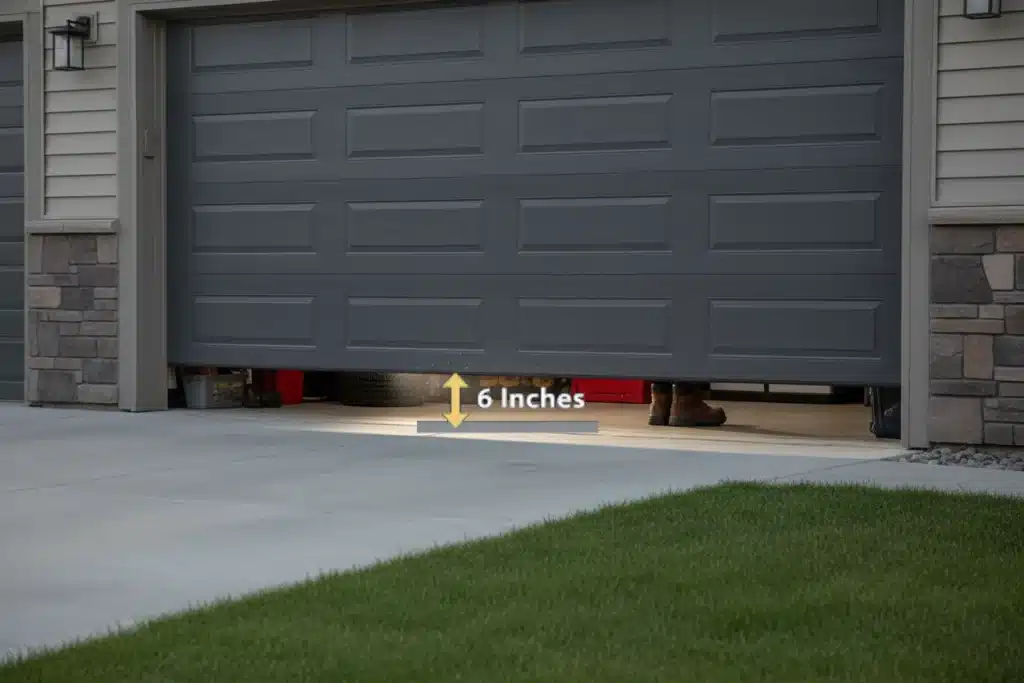
Few things are as alarming as pressing the wall button or remote and watching your garage door lift a little, stall at a small gap, then drop back down again. Your ears may catch the motor’s hum, but the door itself refuses to budge. At first it’s easy to assume the opener has died, but in most cases the abrupt “6‑inch stop” is intentional. Modern openers monitor the weight of the door and shut themselves down when they sense excessive resistance. This built‑in safety feature prevents the motor from burning out and signals that something upstream — usually the spring assembly — has failed .
This article explains why your door behaves this way, how to verify the cause, and what steps to take next. While this is often a symptom of a major component failure, you can find a deep dive into how these systems work in our Comprehensive Garage Door Spring Repair Guide.
By the end you’ll know whether a broken spring is to blame or if misaligned sensors, track debris or snapped cables are the culprit.
The Main Culprit: A Broken Garage‑Door Spring
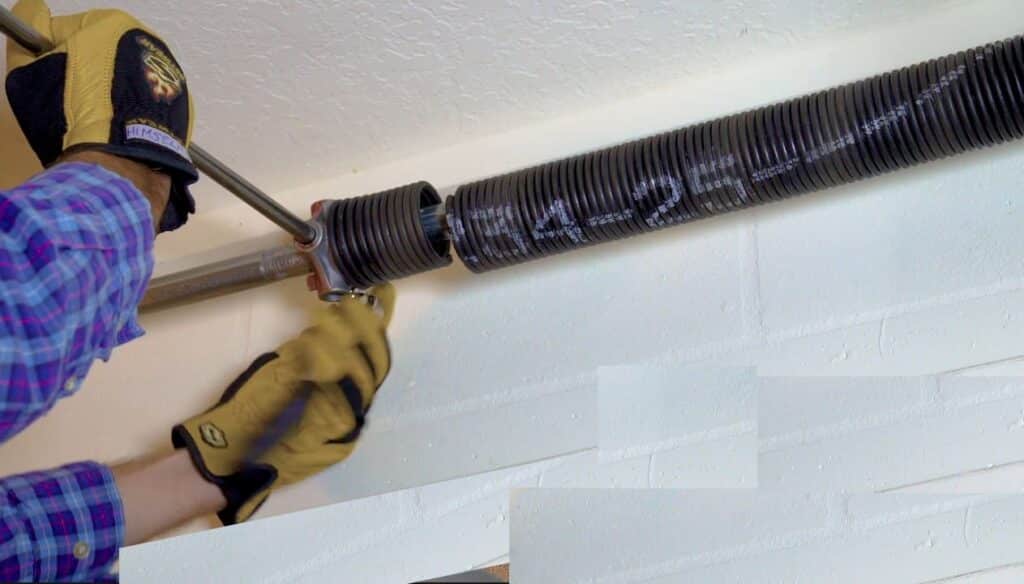
Garage doors are heavy — often between 150 and 400 pounds — yet we barely notice the weight when the system works correctly. That’s because the springs act as high‑tension counterweights. Torsion springs twist above the door while extension springs run along the sides; together they manage most of the door’s mass. The opener’s motor isn’t meant to lift the door on its own; instead it guides movement while the springs provide the muscle. When a spring breaks or loses tension, the door suddenly becomes dead weight and the opener immediately detects the extra force. To protect its internal gears and circuit board the unit shuts down after only a few inches, which is why your door pauses or reverses.
You can recognise a failed spring by listening and looking:
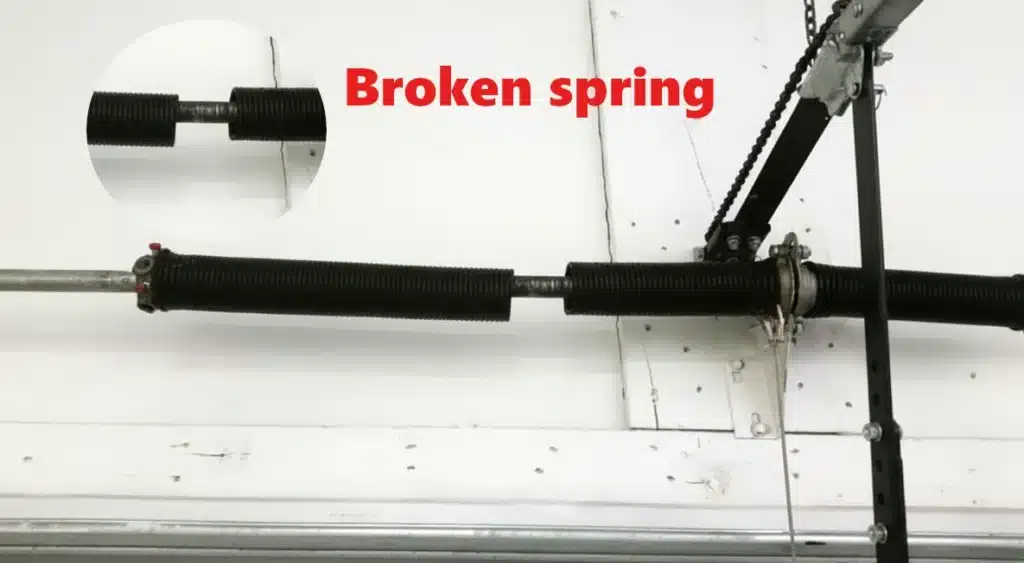
- Visual gap in the torsion spring: Torsion springs should be tightly wound; a noticeable gap two inches or wider means the coil has snapped. Extension springs may appear stretched or tangled.
- Loose or fallen cables: When a spring breaks the tight cable tension disappears. Cables can become slack or fall from their drums.
- Heavier door: Because the springs carry most of the weight, a broken spring leaves the opener (and you) to handle the full load. If the door feels much denser than usual during a manual lift test, it’s likely a spring failure.
- Loud bang: Coiled springs store immense energy; when they snap the sudden release can sound like a gunshot. Homeowners often hear this noise even when the door isn’t being used.
The simplicity of the physics belies how dangerous a spring failure can be. The motor is designed for a light load بمساعدة الزنبرك (with the spring’s assistance). Without that counterbalance the motor senses the door’s dead weight — known as the force limit — and cuts power to avoid overheating. Continuing to operate the opener under this strain risks melting the circuitry or stripping the drive gears.
How to Confirm It’s the Spring (Quick Check)
Before calling a professional, you can perform a few safe, non‑invasive checks. Remember to unplug the opener so it cannot activate unexpectedly.
- Look for a visible break or gap. Use a flashlight to inspect the torsion spring above the door. A clean gap or separation between coils means the spring has snapped. For extension springs, check for stretching or slack in the coils.
- Listen for a loud pop. Many homeowners recall hearing a sharp bang from the garage shortly before the door stopped working. That sound is the spring breaking free of tension.
- Perform a manual lift test (if safe). Pull the emergency release cord to disengage the opener. Lift the door by hand while someone stands clear. If your added support allows the door to open smoothly but it otherwise stalls, the springs lack the tension to support the door’s full weight. Do not attempt this if the door feels extremely heavy or if you lack the strength to control it; an uncontrolled door can fall and cause injury.
- Check the cables and drums. Loose, unwound or fallen cables suggest the spring has lost tension. Cables carry weight with the springs; without proper tension the door will not lift.
These simple tests can confirm a spring issue without risking injury. If you verify any of the above symptoms, avoid using the door until a trained technician replaces the springs.
Other Potential Causes (Briefly)
Although a broken spring is the most common reason for a door that lifts only a few inches, it isn’t the only one. Here are other issues that can trigger the same symptom:
- Safety sensors misaligned or obstructed. Photo‑electric “eyes” at the bottom of the tracks prevent the door from closing on people or objects. If the lenses are dirty or misaligned the door may stop or reverse. Blinking indicator lights on the sensors mean they need cleaning and realignment.
- Bent or damaged tracks. Dented rails or debris in the track can halt a roller’s movement, causing the door to stall. Visually inspect both vertical and horizontal tracks for bends, gaps or buildup.
- Snapped cables. Lift cables work with springs to raise and lower the door. Over time they can fray or snap due to wear or rust. A broken cable often results in uneven movement, loud noises or a door stuck in place. Operating a door with a snapped cable is dangerous because the door could collapse; you should stop using it immediately and call a professional.
- Incorrect opener settings. Garage‑door openers include travel and force limit settings. If these settings drift — due to power surges or accidental adjustments — the opener may think the door has reached full travel when it hasn’t. Some homeowners can follow their manual to reset the limits, but if you must set the force higher than medium to lift the door, there’s likely a deeper mechanical problem.
- Obstructions or debris. Small objects such as a broom handle, toys or accumulated dirt in the track can physically block the door’s path. Clearing the obstruction may restore normal operation.
- Motor or logic board issues. If the opener hums or lights flicker but the door doesn’t move, the internal motor or circuit board might have failed. This is less common but should be considered if all other parts check out.
The Danger: Do Not Keep Pressing the Button!
It’s tempting to keep hitting the remote in hopes that the door will magically work itself loose. Resist that urge. When a spring fails, the opener’s built‑in safety shuts down because it detects a dead weight. Continuing to cycle the opener adds stress and heat to the motor and can burn out the circuit board within days. One article on spring failures warns that repeatedly trying to open a door that stalls after six inches can burn out the motor in less than a week and increase your repair bill dramatically. Similarly, using the door with a snapped cable can cause the door to collapse or other parts to break.
Therefore, once you suspect a mechanical issue:
- Stop using the opener immediately. Unplug the unit so no one accidentally activates it.
- Do not attempt to force the door. Pushing or pulling a heavy, unbalanced door can cause it to slam shut unexpectedly, risking injury or damage.
- Call a professional. Springs and cables are under extreme tension and require specialized tools. DIY attempts can lead to serious injuries. A qualified technician can safely replace the spring, reset the force limits and inspect other components.
What to Do Next?
Depending on your situation, there are two common scenarios after identifying a broken spring:
- Need to get your car out? If your vehicle is trapped inside, you might need to open the door manually while you wait for the repair. See our step‑by‑step guide Opening a Garage Door with a Broken Spring for safe instructions on disengaging the opener and lifting the door with assistance. The article covers safety precautions, how to brace the door and when to call for help.
- Want to secure your home? If the door is stuck open and won’t close, our article How to Safely Close a Garage Door That Is Stuck Open explains how to manually close and secure the door without damaging the opener or injuring yourself. It also offers tips for temporarily securing the opening until a technician arrives.
Conclusion
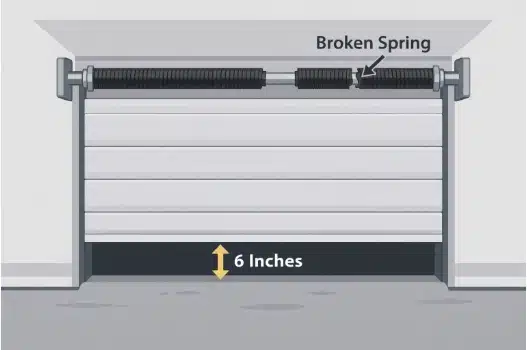
Don’t Force a Heavy Door Attempting to bypass the “6-inch stop” by repeatedly hitting the remote can lead to a burnt-out motor and much higher repair costs. If your diagnostic shows a broken spring or snapped cable, the safest next step is to call in the experts.
Visit our Garage Door Repair Near Me page to connect with a vetted, local professional who can safely replace your springs and get your door back on track today.