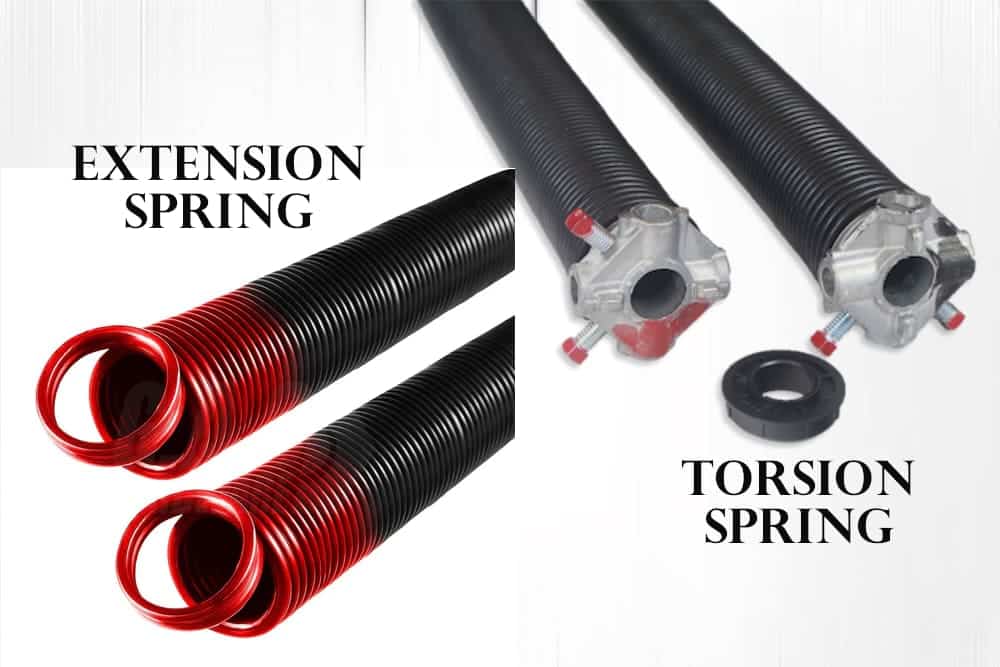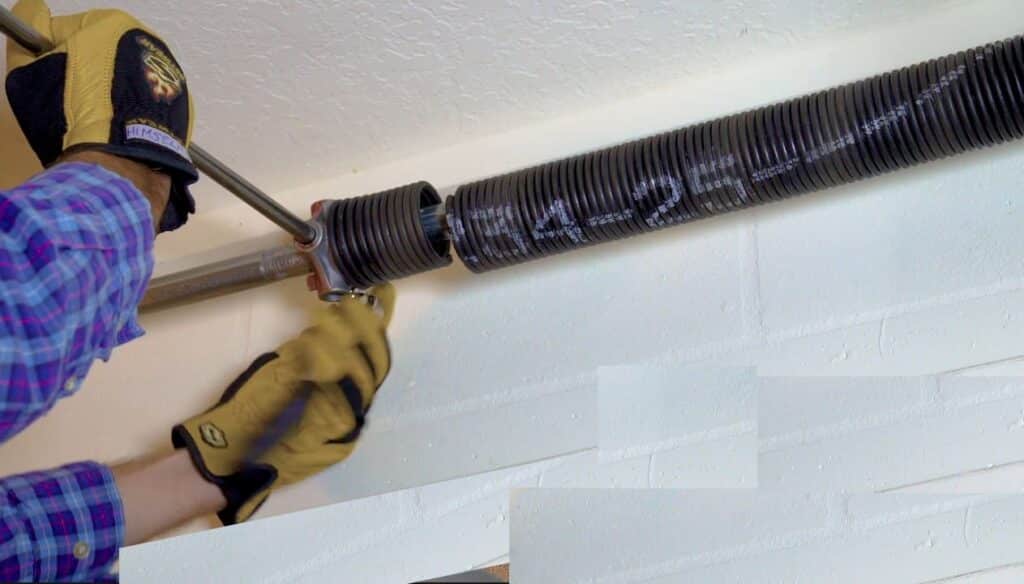
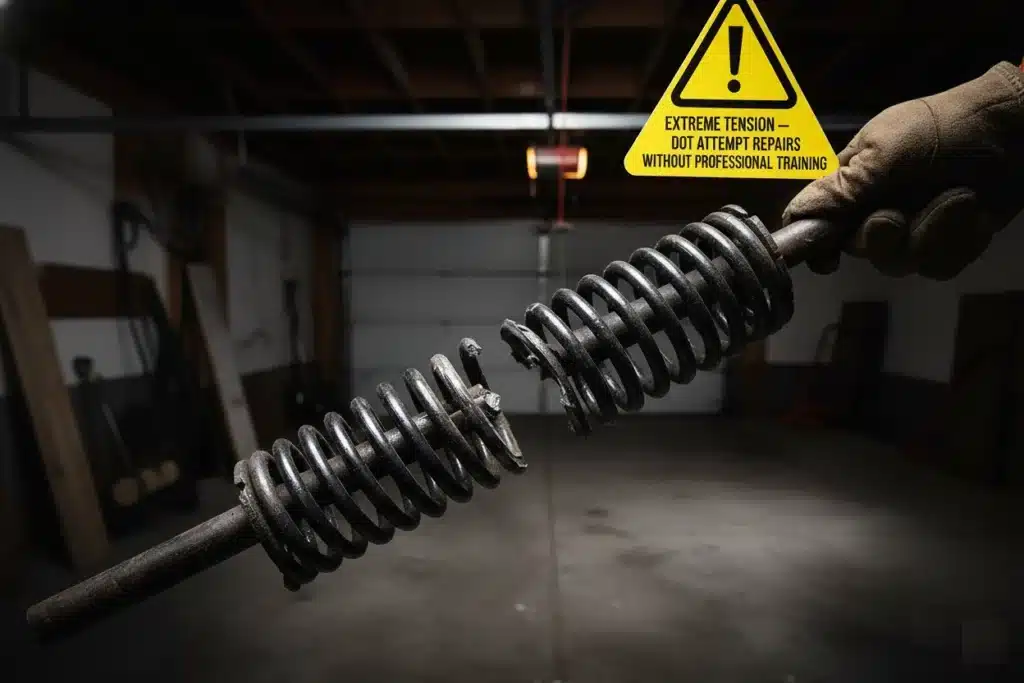
The Loud Bang and the Heavy Lifting: A sudden loud bang that sounds like a gunshot or a car crash coming from your garage is often the first clue something is wrong. Many homeowners report hearing this sharp “BANG”, which is usually the sound of a torsion spring snapping under tension. It’s alarming, but it makes sense once you know the physics: the garage door spring — not the opener — handles 95% of the heavy lifting. These tightly wound springs counterbalance hundreds of pounds of door weight. When a spring breaks, the door becomes “dead weight,” and your automatic opener suddenly struggles (or fails) to move that weight. In short, a broken spring is the real culprit behind a garage door that won’t open, not an opener malfunction. Below are five telltale signs that your garage door spring is broken.
Sign 1: The Visual Gap (The Smoking Gun)
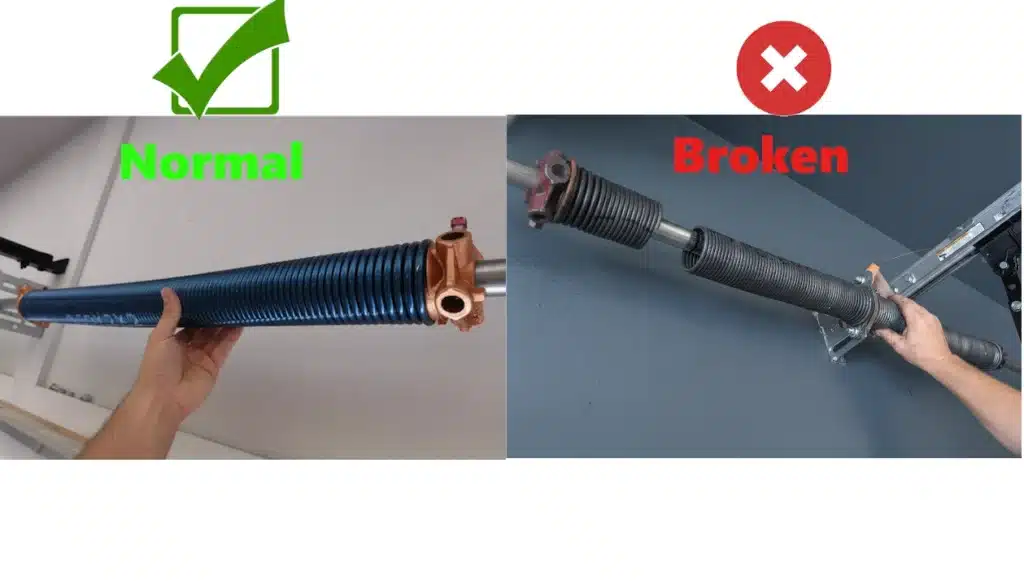
The most obvious sign of a broken spring is a visible gap in the coil. Take a look at the torsion spring above your garage door (or extension springs along the sides). A healthy spring is a continuous, tightly-wound coil. If you see a separation of a couple of inches where the spring has snapped in two, that spring is brokena. In torsion springs, this gap is usually 2–3 inches wide and easy to spot once you know to look for it. (By comparison, intact springs have no gaps at all.) This visual break is the smoking gun of spring failure. Often, people will hear the spring break (that loud bang) and then find the coil split apart. Action: If you notice a gap in your spring, stop using the door and call a professional for replacement – do not attempt to touch or fix the spring yourself, as it’s under residual tension.
Sign 2: The “Heavy Door” & Opener Struggle
When your garage door spring is broken, your door becomes extremely heavy. One common clue is that the garage door opener can only lift the door a few inches off the ground (usually 2–6 inches) before it stops or reverses. You might hit the remote and hear the opener motor whining, but the door barely moves. This happens because the opener is designed to work with the spring, not to hoist the full weight of the door by itself. In fact, modern openers have safety sensors and force limiters that detect when the door is too heavy (due to a broken spring) and will shut down to prevent burning out the motor. It’s a built-in self-protection mechanism: without the spring’s counterbalance, a standard 150–300 lb garage door is simply too much for the opener’s motor. So if your door only opens a few inches and feels stuck, or the opener strains and then stops, that’s a strong sign of a broken spring.
Tip: Don’t keep trying to force it – you might strip the opener’s gears or overheat the motor. Instead, turn off the opener and proceed to check the springs or call a technician.
Sign 3: Loose, Tangled, or “Jumped” Cables
Upon a spring breaking, you may notice your garage door lift cables hanging slack or even tangled around the drum. Many panicked homeowners assume a loose cable is the problem, but in reality the broken spring is what caused the cable to lose tension. The cables on either side of the door are kept taut by the spring’s force. When a torsion spring snaps, the sudden loss of tension means the cables can unravel off the drum or dangle freely. You might see a cable that has “jumped” off its spool, become frayed, or even fallen to the floor. This is a telltale sign the spring is no longer doing its job. In extension spring systems, a broken spring might cause the safety cable running through it to go slack or the pulley cables to tangle.
Action: Do not simply reattach or tighten the cable—without fixing the spring, the cable will just come loose again. Recognize that the loose cable is a symptom, and the real fix is replacing the broken spring (often alongside any damaged cables).
Sign 4: The Door Closes Too Fast or Falls Suddenly
A garage door that slams down with a bang instead of closing gently is a major red flag. Normally, the springs act as a counterbalance, controlling the door’s descent. If a spring is broken, the door may fall rapidly when closing because nothing is supporting its weight. You might notice the door free-falling the moment you hit the remote or when it reaches a certain point, rather than the smooth, controlled glide it used to have. This isn’t just an inconvenience – it’s dangerous. A free-falling garage door can crush objects, pets, or people in its path, presenting a serious safety hazard (especially for children and pets who might be underneath). In many cases, the door’s own safety reversal system might kick in and send it back up if it closes too fast, but you should never rely on that alone. If the spring breaks while the door is open, there is literally nothing preventing the door from crashing down unexpectedly.
Warning: If you observe your door dropping quickly or slamming, discontinue use immediately. Keep everyone clear of the door and call for repair. Do not try to catch or stop a falling door – the force is immense and could result in injury.
Sign 5: A Crooked or Unbalanced Door
If you have a two-spring system (common on double-car garage doors) and one spring snaps, the garage door might start to lift unevenly. One side may rise faster than the other, causing the door to look crooked or slanted as it moves. In this scenario, the remaining good spring is now trying to do all the work, pulling one side of the door up while the other side lags. The result can be a door that gets jammed in its tracks or visibly tilts to one side during operation. You might also notice the door shudders or jerks on the way up due to the imbalance. An unbalanced door puts extra strain on other components like the tracks, hinges, and opener. In the case of extension springs (mounted on each side of the door), if one breaks, the door can look crooked since only one side is being lifted.
Action: If your door is looking lopsided or binding in the track, check the springs – you’ll likely find one has broken. It’s wise to replace both springs on a two-spring door system, since the second spring has also been through the same number of cycles and could fail soon after the first.
Safety First: Don’t DIY a Broken Spring
Discovering any of these signs means it’s time to call a professional garage door technician. Broken springs are extremely dangerous to handle without proper training and tools. The springs are under high tension – even when broken – and can cause serious injury if released improperly. A qualified technician will safely remove the old spring, install a matching new spring, and ensure your door is balanced and operating smoothly again. For your safety, do not attempt to open a garage door with a broken spring (aside from carefully disengaging the opener to close it manually if absolutely necessary), and never try to replace the spring yourself.
By recognizing these warning signs early and getting timely professional help, you can avoid further damage to your garage door system and keep your family safe.
🛑 Confirmed a broken spring? Stop! Do not attempt to operate the door. Your next priority is safety and access. Read our Emergency Guide: How to Safely Open a Garage Door with a Broken Spring to learn how to get your car out safely.
If you are ready for a professional replacement, Find a Trusted Garage Door Technician Near You to get your door back in service today.”